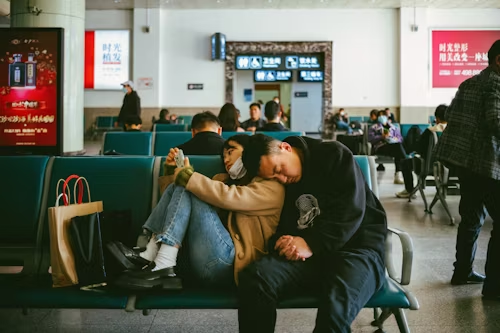
You’ve just landed. The airport signs and symptoms are in an overseas script, the hum of verbal exchange is in an unexpected language, and your frame feels… absolutely betrayed. Your brain is fuzzy, your stomach is a pressured knot, and your strength levels are performing a dramatic nosedive even as simultaneously screaming that it’s 3 AM and time for a second wind. Welcome to the brutal, disorienting fact of jet lag.
It’s greater than simply being tired. It’s a complete-scale mutiny of your inner structures. Jet lag is the fee we pay for conquering distance, for compressing time zones in a metallic tube hurtling through the sky. But what if it didn’t have to be this manner? What if you may step off that lengthy-haul flight feeling not like a zombie, but like a traveler equipped to seize the day?
The technology of circadian rhythms has advanced light-years, supplying us with a conflict plan. This isn’t about vague pointers; it’s a strategic guide to outsmarting your personal biology. Let’s dismantle the monster of jet lag, piece by piece, and rework you right into a seasoned traveler.
You have just landed. Airport signs are in a foreign script, conversations buzz in an unfamiliar language, and your body feels… completely betrayed. Your brain is fuzzy, your stomach is in knots, and your energy levels show a dramatic decline while simultaneously screaming that it’s 3 in the morning and time for a fresh start. Welcome to the cruel, confusing reality of jet lag.
It’s more than just being tired. This is a full-scale rebellion of your internal systems. Jet lag is the price we pay for conquering distance, for compressing time zones in a metal tube flying through the sky. But what if it doesn’t have to be this way? What if you could get off that long-haul flight not as a zombie, but as a traveler ready to enjoy the day?
The science of circadian rhythms is light-years advanced and gives us a battle plan. It’s not about vague tips; This is a strategic guide to overcoming your own biology. Let’s destroy the monster of jet lag bit by bit and turn you into a pro.
Table of Contents
1. Understanding the Enemy: It’s Not You, It’s Your Circadian Rhythm
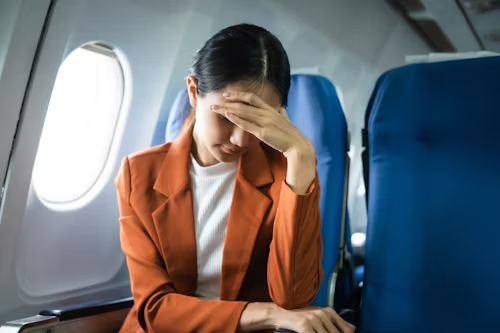
Before we can beat jet lag, we need to understand it. At the center of this conflict is your circadian rhythm – your body’s 24-hour clock, located in the suprachiasmatic nucleus (a fancy name for a small area in your brain). This watch controls everything: when you feel hungry, when you feel awake, and more importantly, when you feel tired.
It is fine-tuned by powerful external signals, the most important of which is light. When you cross multiple time zones, this carefully calibrated clock suddenly, violently, goes out of sync. Your body is in Paris, but the rhythm is still set in New York. The resulting chaos is what we call jet lag.
The symptoms are a direct result of this internal strife:
Fatigue and insomnia: Your body wants to sleep when the sun comes up and wake up when it gets dark.
Cognitive impairment: That “brain fog” is real—your memory, judgment, and reaction time are compromised.
Digestive problems: Your gut has its own circadian rhythm. Confusion persists, leading to constipation or diarrhea.
General discomfort: headache, irritability, and a feeling of being “off”.
2. Master the Light: Your Most Powerful Weapon
Light is the dial of the body’s internal clock. Using it strategically is the most effective way to deal with jet lag.
Rule of thumb: When traveling east, change your watch first. When you travel west, you’ll need to move it later.
Traveling East (eg, NYC to London): You’ve wasted your time. Your goal is to fall asleep quickly. Therefore, look for morning light upon arrival and avoid afternoon and evening light. Morning light will get your rhythm moving, helping you wake up and go to bed earlier. If you land in London at 8 am, even if you’re tired, get out. walk in the park. Enjoy that sun. Conversely, sunglasses in the afternoon can help prevent your clock from being further delayed.
Travel west (eg, London to LA): You have gained time. Your goal is to continue afterwards. So look for evening lights. This will help slow down your rhythm, making it easier to stay awake for your local bedtime. If you land in LA at 3 pm, resist the urge to take a nap as dusk falls. Rather go for a walk when the sun goes down.
Pro tip: For the ultra-dedicated, you can start this process before you fly. For a few days before traveling east, wake up 30-60 minutes earlier each day and immediately receive bright light. To travel west, stay awake a little longer each night in the evening light.
3. Strategically Sync (or De-Sync) Your Sleep Before You Fly
The battle against jet lag starts long before you board the jet. Actively adjusting your sleep schedule in the days before your trip can create a “soft landing” for your circadian rhythm.
For eastbound travel: Try to go to bed and wake up 15-30 minutes earlier each day for 3-4 days before your flight. This gradual change means that your body has already partially acclimated to the new time zone before you leave home.
For westbound journeys: In the same way, you move bedtime and wake-up time by 15-30 minutes each night earlier.
This method requires planning, but the benefits are enormous. Imagine boarding the transatlantic jet that is already scheduled to depart two hours before your destination. You’ve effectively started the reset process from the comfort of your own home, making the shock to your system upon arrival much less severe. It is a preventive attack against fatigue.
4. Hydrate Like It’s Your Job (Because In the Air, It Is)
The environment inside a commercial jet is extremely dehydrating. Cabin humidity is often kept at a desert-like 10-20%, which is lower than most of the world’s deserts. This dry air sucks moisture from your skin, respiratory tract, and entire body. Dehydration dramatically increases the symptoms of jet lag – fatigue, headaches, and cognitive fog.
Your mission on board is simple: Drink water and lots of it. That glass of wine may seem like a great way to relax, but alcohol is a diuretic and seriously disrupts sleep patterns, preventing you from getting deep, restful sleep. Similarly, coffee provides a short-term solution but is a long-term problem, further dehydrating you and potentially ruining your ability to sleep when you want to.
Consider your water bottle your most important carry-on. When the flight attendants offer water, say yes. Your well-hydrated body will thank you when the jet wheels touch down
5. Master the Art of the Strategic Nap
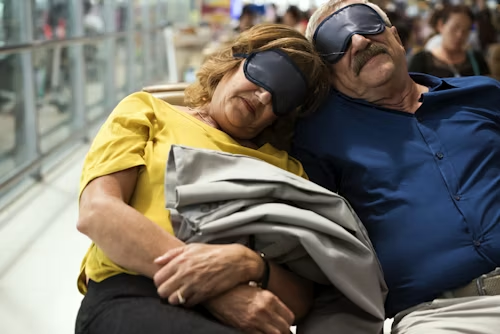
Sleeping on a plane is a challenge. The roar of jet engines, cramped seats, crying babies – this is hardly the ideal freedom of sleep. But if used correctly, the strategic lie can be a powerful weapon. The golden rule is: keep it short and time it wisely.
A nap of 20-30 minutes can provide a restful sleep without throwing you into a deep sleep, causing you to wake up groggy (a phenomenon known as sleep inertia). This is perfect to avoid fatigue upon arrival.
Falling into deep sleep too close to the local time for sleep can make it impossible to fall asleep later, essentially reinforcing the old time zone.
The goal is to be tired enough to crash at the correct local time. If you must take a nap after landing, limit it to 20 minutes, ideally in the afternoon. It can provide a breath of fresh air to get you to a proper bedtime without ruining the night.
6. Consider Melatonin: The Hormonal Reset Button
Melatonin is a hormone produced naturally by the brain’s pineal gland in response to darkness. This is the chemical signal that tells your body, “It’s night, time to rest.” For jet lag, supplemental melatonin can be used as a powerful tool to trick your brain into accepting a new sleep schedule.
However, timing is important and depends on your direction of travel.
For eastbound journeys: Take approximately. 0.5 mg to 3 mg melatonin. It can help to move the clock forward 30-60 minutes before the desired bedtime in the new time zone.
For westbound travel: This is generally less important, but if used, should be taken in the morning when you wake up in the new time zone (to help delay the rhythm), although this is more complicated and less common to practise.
It is important to consult a doctor before using melatonin, especially if you have any underlying health conditions or are taking other medications. But when used correctly, this little accessory can act as a powerful reset button for your internal clock, signaling that it’s time to sleep, even if your body protests. It’s a simple chemical intervention to help you adjust after flying around the world.
7. Eat and Move with Intention Upon Arrival
You’re right – jet lag doesn’t just mean being tired. It feels like your body is traveling in time without a map.
Let me tell you how I’ve learned to deal with it—not by spreading melatonin like candy, but by listening to your body and giving it the gentle, human cues it craves.
When I enter a new time zone, I don’t wait for my stomach to rumble. I force myself – gently, kindly – to eat something real, even if I’m not hungry. The first meal? It’s not about fuel. This is a sign. I will sit outside with a hot cup of coffee and a piece of toast, and watch the sun rise (or set) in a strange street. The smell of the bread, the warmth of the mug in my hands – it’s a ritual. And that ritual says to my body: It’s morning now. This is where we are.
Sometimes I skip breakfast on the plane. Not because I’m trying to be tough, but because I want to come with a little hunger in my stomach – so when I finally sit down to eat local food, it feels like a homecoming. A proper meal. Not just peanuts and soft drinks.
And so – I move on.
I used to think I was going to crash. But I’ve learned that when I’m lying in a hotel bed staring at the ceiling, my brain is screaming at me that it’s 3 in the morning! Just makes it worse.
So instead I lace up my shoes – even though I’m still wearing my travel clothes – and head out. Only 20 minutes. No goals. No tracker. Just me, the pavement, and the rhythm of my breathing. I saw how the light fell on the buildings. I hear the sounds of a city waking up or dying. I let my body expand, let loose, remember how to stay upright and alive.
It’s not about burning calories. It’s about saying: I’m here. I am present. This is my new day.
And somehow, until the next morning? My body remembers. It begins to wake up with the sun. It feels hungry at the right time. I fall asleep without trying.
8. Create a Fortress of Sleep at Your Destination
You have done difficult things.
You’ve planned your light exposure like a scientist. You drank water like it was liquid gold. You’ve also objected to the siren song at 2 p.m. Snoops that felt like heaven but will ruin the night.
Now you’re here – tired, a little worn around the edges, lying on a hotel bed that smells faintly of lavender detergent and unfamiliar city air.
This is your last stand.
Your bedroom is no longer just a room. This is your sanctuary. Your fort. Your quiet rebellion against the chaos of jet lag. And you don’t want to let a flashing LED or a barking dog steal your sleep.
So here’s how to protect it – gently, not harshly.
Darkness is not only good – there can be no compromise.
I used to think, “I can sleep through anything.”
Then I stayed in a hotel in Tokyo where the alarm clock shone like a neon sign. I woke up every night at 3am, heart racing, convinced I had fallen asleep.
Found out? My eyelashes are not armor. Light passes through curtains like moonlight.
Now? I pack a silk eye mask. I put tape over every flashing light – charger, TV, coffee maker thinking it helps. I close the curtains as if closing the door to the world. I want my brain to think it’s the dead of night. Not just a show for the night. Real night.
Cold air is your secret ally.
I slept under a mountain of blankets, convinced that warmth meant comfort.
But my body doesn’t care about resting—it cares about falling.
That sweet, slow drop in your core temperature? This is the sign that says: time to float.
So I crack the window a little, even though it’s cold. I turn the AC down to 65°F – just enough to feel crispy on my skin. Sometimes I put a cold washcloth on my neck. It’s not fancy. This is simple. But it works.
Noise? There is no need to be quiet. it just is
9. The Ultimate Goal: Arriving as Yourself
The dream is not just to avoid feeling terrible; It’s about coming as yourself. It’s like landing in a city like Bangkok, checking into your hotel, and having the energy to explore the lively street markets, instead of collapsing. It’s about coming to London for an important meeting and being able to think clearly, negotiate effectively, and present your ideas with clarity and confidence.
The next time you book a ticket for a long-haul flight, think of it not just as reserving a seat on the plane, but as a starting gun for a well-planned mission. A quest to master light, control your environment, and strategically guide your body during transitions. The roar of jet engines would then become the sound of opportunity, not the prelude to wasted days. You can step off that jet not as a victim of time zones, but as the owner, ready to claim every moment of your adventure, wide awake and truly alive. The science is there. The power is in your hands. Now go raise it.
Q: How long does jet lag usually last?
A: Jet lag typically lasts 1–3 days per time zone crossed. Most people recover fully within a week, especially with proper light exposure and sleep hygiene.
Q: What’s the #1 science-backed tip to beat jet lag?
A: Adjust your light exposure ASAP—seek bright sunlight in the morning at your destination to reset your circadian rhythm faster.
Q: Can melatonin really help with jet lag?
A: Yes. Taking 0.5–5 mg of melatonin 30–60 minutes before bedtime at your destination can help synchronize your internal clock, especially for eastward travel.