Like a ghost jet floating through your life, watching yourself pass by without you feeling present. It’s jet lag, the silent thief of travel joy, the invisible wall between you and the experience you’ve dreamed of. All travelers know this feeling. It doesn’t matter how exciting the destination is – if your body is still stuck several hours behind, you’re not really there. But what if it doesn’t have to be this way? What if you could get off the plane without dragging your exhaustion like a suitcase, but straight, lucid,d and wide awake?
Think of the people who seem to travel effortlessly—the CEO who gives an impeccable presentation minutes after landing, the frequent flier who talks calmly over breakfast as if they’ve always lived in this time zone. They are not magical. They are not immune. They have simply learned to work with the body instead of against it. It’s not about privilege or private jets – it’s about strategy, awareness, and care. It’s about jet mastery.
This means that you prepare your body a few days before you fly, and treat the flight not just as a trip, but as part of a change in your rhythm. That means drinking water as medicine, using light as a tool, napping with precision, and preserving your first night’s sleep as if it’s the key to everything. It’s about small choices made with big intentions.
Table of Contents
Strategy 1: The Pre-Flight Protocol: Prime Your Body Clock
A true jet master doesn’t start their trip at the airport – they start it several days, sometimes even a week, before packing their bags. It’s the quiet, behind-the-scenes work that most travelers overlook, but this is where the real magic happens. It’s called pre-flight conditioning, and it’s not about stiffness or punishment – it’s about gently guiding your body into a new rhythm before you’re in the air.
After about three days, you start making small, conscious changes. If you fly east, where the day suddenly seems shorter and you have to wake up with the sun, go to bed and get up just thirty to sixty minutes earlier each night. Don’t make it a chore – take it easy, like turning down the volume on an old song so the next song can start. If you’re heading west, do the opposite: Get up a little later, sleep just a touch longer, let your body acclimate to longer daylight like sunlight warming a cool room. Adjust your meals too, eating breakfast, lunch, and dinner close to your destination time.
These small changes may not seem dramatic, but together they lay the foundation for a smooth transition. Then comes hydration – the unsung hero of travel preparation.
You can add coconut water or a sugar-free electrolyte mix, because hydration isn’t just about drinking — it’s about absorbing. Electrolytes help your body retain precious fluids, so every sip counts.
Strategy 2: The In-Flight Sanctuary: Mastering the Mobile Environment
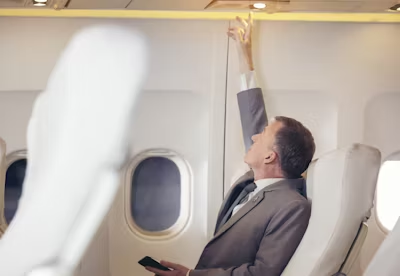
The hours spent inside that metal tube aren’t the only time you kill—they’re the most important part of your jet journey, the silent battlefield where the jet master wins and the rest of us survive. This is not a delay or a distraction; This is the main event, the sacred window where you can gently, powerfully align your body to your destination before you touch the ground. The first and most powerful tool you have is lightweight.
As soon as you board, set your watch to your destination time—not as a trick, but as a promise to yourself that you’re ready to get there. Then let the sun or darkness guide you. If it’s daytime where you’re going, open the window shade, sit close to the light, and let your eyes soak in like morning coffee on a cool porch. If you have a small light therapy device, use it. If not, let the natural brightness remind your brain: This is the time you are awake. But if it’s night at your destination, do the opposite.
Use glasses that block blue light. Reduce shadows. Turn off the screen. Let the phone go dark. This isn’t about being anti-recreation—it’s about protecting your sleep hormone, melatonin, so your body knows it’s time to rest, even if you’re still flying in the sky. You’re not ignoring your environment—you’re honoring your biology.
Hydration doesn’t stop when you sit. The air inside the plane is even drier than the desert air, and it steals from you without even asking. Start with a full bottle before giving up, then drink at least eight grams every hour. Don’t wait until you’re thirsty – thirst is your body’s cry for help. Bring your own reusable bottle and ask the flight crew to refill it. Skip the soda, skip the juice, skip the sugary drinks – these are cheats that will make you feel worse, not better.
Strategy 3: The Strategic Supplement & Aid Arsenal

No magic pill will banish jet lag overnight, but a jet master knows that small, thoughtful tools can make all the difference—not by forcing your body to comply, but by gently nudging it back into rhythm.
There, but not until 4 o’clock. No matter where you’re from, taking a small dose of melatonin and dimming the lights can help you signal your body that it’s already there, speeding up adaptation without disrupting a full night’s sleep. Then there’s magnesium – the silent relaxation hero. Choosing a gentle, absorbable form like magnesium glycinate helps soothe tense muscles, calm a racing mind, and reduce that strange feeling of being connected even when you’re completely exhausted, eyes heavy, and can’t close.
Taking it before bed doesn’t make you sleepy – it just helps you fall asleep naturally and deeply, just like you did as a child. And when it comes to caffeine, Jet Master doesn’t drink it out of habit or frustration. They use it like a surgeon uses a scalpel – only when it serves a purpose.
The first cup of coffee is not consolation; it is a declaration. If it’s morning where you arrive, then yes, walk slowly into the sunlight, let it warm your chest, and let it connect you to the new day. But if it is still night, let it be. That airport espresso may feel like salvation, but it’s just a debt you’ll pay off in sleepless hours later. These are not supplementary shortcuts. They are friends again
Strategy 4: The Immediate Post-Flight Reboot
The first twenty-four hours after you land are everything—those quiet moments where all the work you’ve done on the plane either takes root or falls apart. It’s not just about getting through the day—it’s about claiming your new time zone with intention, not exhaustion. As soon as you go out, no matter how tired you are, no matter how much your body urges you to crawl into bed in broad daylight.
Even if it’s gray, even if it’s cold, even if you want to hide under the covers, step into that light. Your body doesn’t care about your schedule—it cares about the sun. If you are still in the morning, let the morning light fall on your face, even if it is only for twenty or thirty minutes. Go slowly. breathe. Pay attention to the air, the sounds, the different ways the world feels. That sunlight is the most powerful reset button you have, far more effective than any nap or pill. And yes, the bed calls.
The pillows are soft, the sheets are cool, and the thought of sinking into them feels like heaven. But resist. If you must take a nap, keep it short—twenty minutes maximum—and never after four in the afternoon. A long nap may seem like a blessing, but it steals the sleep pressure you need to fall asleep that night, and before you know it, you’re awake at two in the morning, staring at the ceiling and wondering why you’re still so far behind. Jet Masters don’t chase sleep – they create it. Move your body too.
Don’t wait until you feel ready. Take a brisk walk around the neighborhood, swim a few laps in the hotel pool, lie down gently on the floor. It doesn’t have to be intense. It just has to be real. Movement wakes up your circulation, calms your nervous system, and reminds your body that this place is now your home. And when it comes to food, don’t wait
Strategy 5: The First 96-Hour Integration Plan
This happens through gentle association. For the first few days, you should treat your waking hours as an unbreakable promise to yourself. Even if you toss and turn all night, even if you feel like you don’t get any rest at all, get up at the same time every morning. Then go straight towards the light. Open the curtains. Get out. Let the sky tell your body what time it is. The daily rhythm – the morning light, the hustle and bustle that follows, meals on time – is the quiet foundation that rebuilds your internal clock, brick by brick.
Your sleeping space becomes your sanctuary, not just a room with a bed. Make it dark – really dark. Use blackout curtains, tape over flashing lights, and use eye masks if necessary. Darkness is not optional. This is a sign. Keep the room cool, as your body needs the temperature to drop for deep, restful sleep. If there is noise – the hum of traffic, distant sounds – use earplugs or a white noise machine. Let that still sound be your lullaby. And when it’s time to sleep, clean it. Leave the phone in another room. Close the laptop. No last-minute emails, no scrolling, no blue flashes stealing your melatonin.
Rather, read a book, drink herbal tea, breathe slowly. Tell your nervous system: The world can wait. But coping is not about toughness. It’s not about forcing yourself into a punishing workout when your legs feel leaden or skipping meals because it’s “not the right time.” True knowledge is being heard. If your body is whispering for rest, take a walk instead of a jog.
Conclusion: From Jet-Lagged to Jet Master
Overcoming jet lag isn’t luck—it’s a quiet, deliberate practice, a way of moving through the world that transforms chaos into calm and exhaustion into clarity. It’s not about the luxury of a private jet or first-class comfort—it’s about the profound luxury of being prepared, knowing your body’s rhythms, and respecting it rather than fighting it. People who seem to glide across time zones without fatigue are not immune to jet lag—they’ve simply learned to swim with the current rather than drown in it.
They pass out, take a deep breath, and begin again—not as someone who survived the journey, but as someone who has arrived fully awake. It is not reserved for CEOs or diplomats. It’s available to anyone with a passport, a willingness to learn, and the courage to take care of themselves before worrying about their schedule.
It’s about viewing each long-haul flight not as a burden, but as an opportunity to practice a new kind of intelligence—one that values presence over productivity, rhythm over crowds, and confidence over exhaustion. So the next time you book your tickets, don’t be afraid of delays. Welcome it. Consider this your invitation to rise above the ordinary. Get on that plane, not like a passenger waiting to be taken off, but like a pilot who knows how to navigate the skies
Do elite travelers really avoid jet lag?
Yes—they use precision-timed light, melatonin, and hydration protocols to reset their body clock in under 24 hours, not days. It’s not luck—it’s strategy.
What’s the one move that separates amateurs from jet elites?
They adjust their schedule before takeoff—not after landing. Smart pre-flight circadian prep cuts recovery time by up to 70%.
Is melatonin safe for frequent flyers?
Absolutely. When taken in low doses (0.5–1 mg) 30 min before destination bedtime, it’s a safe, non-habit-forming tool trusted by pilots and executives worldwide.