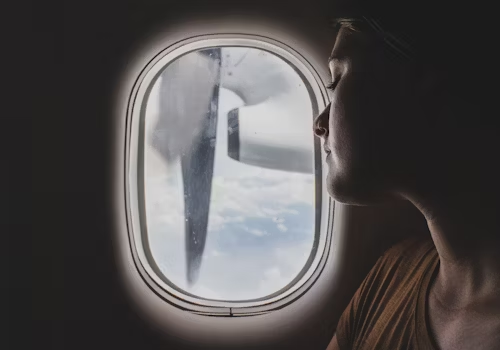
The dream is beautiful—so achingly, universally beautiful—that you board the jet with a sense of quiet euphoria, close your eyes, put on headphones, imagine the moment you enter an exotic sky: the fresh air of Tokyo at dawn, the golden mist of Marrakech at sunset, the quiet sound of a European city waking up just for you.
You imagine yourself rested, awake, fully present—ready to walk into the boardroom with laser focus, to taste your first piece of authentic pasta in Rome without yawning, to feel the sand between your toes in Bali, to conquer your happiness without the fog of exhaustion. You’ve packed your favorite book, neck pillow, and noise-cancelling headphones. Are you ready?
And then, six hours later, the cabin lights dim, the seat belt sign flickers, and you realize you’re not coming. You will be destroyed.
Table of Contents
Secret #1: The Pre-Flight Time Shift – Your First Jet of Proactivity
But real travelers—those who wake up at 7 a.m. local time to land in Tokyo, or head to a London meeting at 9 a.m. with sharp eyes and a steady voice—know something the rest of us never learned: Jet lag doesn’t start on the plane. It starts when you stop respecting your body’s rhythms. And the real secret? It starts before you pack your bags.
The professional does not wait at the airport. They don’t wait for the boarding call. They start changing the world three, sometimes five days before they take off. If they fly east — toward the sun, toward the lost hours — they start waking up 30 to 60 minutes earlier each morning. Not dramatic. Not with loud alarms and coffee sprinklers. But carefully. Like turning a dial, not flipping a switch. They eat breakfast an hour before. ]
They dim the lights an hour before bed. They stop scrolling their phones at 10 pm, not because they are being disciplined, but because they are preparing. His body doesn’t know it’s being trained to fly—it just knows it’s being asked to live a little differently. And on the quiet, normal days, their internal clock starts to break. This is not a riot. It’s a whisper. A soft, steady nod towards a new rhythm.
And if they fly west—toward the long, slow pace of the extra hours—they do the opposite. After a while, they wake up. They had dinner later. He let the evening drag on. They do not fight the natural pull of fatigue; They guide it. they maintain their bodies
Secret #2: The Airport Fast–Fueling for the Jet

It’s the secret that makes seasoned travelers pause and then smile—because it seems almost too easy, even a little absurd. Don’t eat anything for twelve to sixteen hours before landing? no breakfast. No midnight snack on the plane. There is no prohibition if meals on board are served at 03.00 according to your scheduled departure time. No tea. No coffee with cream.
No nuts, no granola bars, no chocolate-covered pretzels, just to “take the edge off.” This seems horrible. This feels like punishment. And for many people, this is the hardest rule to follow—not because the body resists, but because the mind resists. We have been conditioned to believe that hunger is an emergency, that food is comfort, that eating is the default response to boredom, stress, or simply to pass the time. But people who conquer jet lag aren’t just flying across time zones—they’re also transcending their own instincts.
Here’s why it works: Your body doesn’t have a single clock. There are dozens of them. The master clock in your brain—the suprachiasmatic nucleus—tells you when to be awake, when to sleep, when to feel awake. But hidden in your liver, kidneys, intestines, and even your muscles, they have their own little clocks, quietly ticking away in their own rhythm, waiting for signals.
So here’s the ritual: If you land in Tokyo at 8 am local time, stop eating around 4 pm. One day before the flight. You finish dinner early. You drink water. You sip herbal tea. After that, you should avoid anything containing sugar or fat. You don’t eat breakfast. You don’t gnaw. You leave your stomach calm. and yours
Secret #3: The Hydration Jet Hijack – Beyond the Water Bottle
Everyone tells you to drink water on a long-haul flight – as if it’s the easiest and most obvious thing in the world, like remembering your boarding pass or wearing your seat belt. And sure enough, it’s true: The air inside an airplane is drier than desert sand, strips moisture from your skin, dries out your throat, makes your eyes gritty, your head heavy, your mind dull. You blame jet lag for the fuzzy, half-baked feeling.
But real travelers—those who land in Tokyo, wide-eyed and alert, or those who walk into a London meeting at 9 a.m. without so much as a yawn—know the truth: Jet lag isn’t just about time zones. It’s about dehydration. And not the kind you fix with a bottle of water. The real enemy isn’t dry cabin air – it’s the wrong kind of hydration.
Professionals don’t sip. They organize.
They don’t reach for a can of soda because it’s “refreshing.” They don’t order a glass of wine to “stay up” or a double espresso to “stay awake.” They know better. Alcohol and caffeine are not just indulgences – they are biological saboteurs.
Both are powerful diuretics, meaning they draw water from your cells, speeding up dehydration. But what’s worse, they destroy your sleep structure. Alcohol doesn’t help you sleep—it fragments it, shattering the deep, restorative REM cycles needed to reset your brain. Caffeine doesn’t just keep you awake—it delays your body’s natural melatonin release by hours, throwing your internal clock even further out of whack. And when you drink them on a flight? You’re not just dehydrating yourself—you’re hurting your ability to recover.
So instead, their hydration ritual becomes a quiet, sacred practice. They arrive at the airport with a large, empty, refillable bottle – stainless steel, durable, simple. they fill it in first.
Secret #4: The Light Mastery Protocol – Programming Your Internal Sun
Light is not just something that allows you to see the world – it is the silent conductor of your entire inner biology. Your body’s master clock, located deep inside your brain, does not read clocks or calendars. It reads light. And the quality, timing, and intensity of that light tells everything: when to wake you up, when to put you to sleep, when to release hormones, when to digest food, when to repair your cells.
This is your willpower – your “time giver” – and it is much more powerful than caffeine, melatonin or even willpower. And yet most of us treat light as background noise. We stumble off the plane, look up at the sun (or hide under it), and wonder why we feel like our bodies are stuck in another dimension. But the seasoned traveller? They treat light as a weapon – and with it they rewrite their rhythms in real time.
Here’s the truth: Jet lag isn’t just about crossing time zones. It’s about your internal clock being out of sync with the world around you. And the fastest way to resync isn’t to sleep. This is sunlight – used with surgical precision.
But instead, if you force yourself—yes, even if you’re tired—to walk as soon as you land and stand in the morning sun for 30 to 60 minutes, something remarkable happens. The bright, natural light hits your retina, signals go straight to your brain’s master clock, and it whispers: It’s morning now. Reset. launch. It’s like pressing a biological fast-forward button. Your cortisol gradually increases. Your melatonin shuts down. Your body stops fighting the new day and starts adapting to it.
Secret #5: The Strategic Snooze – To Nap or Not to Nap?
As soon as you step off the plane, a primal, almost irresistible desire hits you—heavy eyelids, drooping limbs, a fog rolling in like a tide you can’t swim against. You will just collapse. To close the eyes. Disappear into sleep, and wake up in a different place – a normal place, a place in alignment, a place where the body remembers how to wake up.
The hobbyist listens to that urge. They find a quiet corner at the airport, snuggle up on a bench or collapse on the hotel bed at 2 am local time, thinking I’m just going to rest for a while. They sleep for three hours. They wake up disoriented, dazed, their brains thick with sleep inertia—a lethargic, half-dead state that feels like being trapped underwater. And then, when night falls, they lie staring at the ceiling, heart racing, mind racing, and completely unable to sleep. They think they have done everything “right”. They slept. He rested. So why do they feel bad?
Does not combat professional fatigue. They do it – with the precision of a surgeon, the patience of a monk, and the discipline of a warrior.
They know: sleep is not the enemy. But uncontrolled sleep? It’s a trap.
The first night? This is your anchor. This is the basis of your new rhythm. If you can make it by 10 p.m. local time – No matter how tired you are, how teary-eyed, how tempted you are to give up – you’ve won more than a night’s sleep. You have claimed your day.
But what if you collapse?
Secret #6: The Move-As-You-Fly Method – Defying the Jet’s Confines
You board the plane, strap yourself in, and sink into that familiar, sinking feeling – the weight of the long journey ahead, the silence of the cabin, the dim lighting, the low rumble of the engines lulling you into a trance. You tell yourself that you want to relax. You want to close your eyes. You will be swept away. But what you don’t realize is that your body isn’t designed to stay still for ten hours. It was not designed for hibernation. It was made to move, to strike, to breathe with movement. And when you sit motionless on the narrow seat, your body doesn’t “relax”. It starts to shut down. Blood pools in your legs.
Your spine becomes stiff as a dry twig. Your circulation slows down. Your muscles forget how to activate them. You are not sleeping – you are still. And when you finally stand on your goal, your body doesn’t wake up. It moans. Your feet feel like concrete. Your back is locked. Your head is foggy. You didn’t just cross time zones – you were trapped in your own body.
The experienced traveler knows that this is not inevitable. They don’t wait until the legs get tight or the neck goes into action. They are not dependent on the occasional trip to the bathroom as their only activity. They treat flight not as a pause, but as a continuation—a calm, deliberate dance of movement that keeps their bodies alive, alert, and ready to land gracefully.
It’s not about training. It’s about conservation.
Every three minutes, without fanfare, without attracting attention, they begin their ritual. Ankles first: Rotate slowly, deliberately – clockwise, then counter-clockwise – ten times on each leg. Next, calf pumps: Press down on the ball of your foot as if you were stepping on a pedal, then lift your heels, turn your toes toward your calf, and release.
Secret #7: The First 24-Hour Ritual – The Instant Anchor
The last secret is not a trick. This isn’t a gadget, a supplement, or a smart app. It’s something cool—something older, deeper, more human than any algorithm could ever recreate. It’s the ritual you perform as soon as you step out of the airport and into the unknown air of your destination. Not a grand gesture.
No photo of the landmark. Not the first glass of wine that celebrates being “there”. No, the professional does not celebrate the arrival. They get it. And they do it with a cool, unflinching ceremony—one that doesn’t ask for permission, doesn’t compromise with fatigue, and doesn’t let jet lag make the final decision.
This is long.. The compass. The silent declaration that says: I will not pass. I’m coming.
It starts with food – not because they are hungry, but because they know that hunger is fake. Your body may still think it’s 3 am, but the sun is shining. The city is waking up. Locals eat. So they eat too. Even if the stomach is tight, even if the tongue feels thick with fatigue, even if the mouth is about to close at the thought of food. They choose something simple, something real: eggs with greens, grilled fish with seasonal vegetables, a bowl of miso soup with rice, a plate of fresh fruit and nuts. Protein.
Fiber. Real food. No sugar, no caffeine, no processed carbohydrates. They eat at local time – whether it’s breakfast in Tokyo, lunch in Berlin, or dinner in Sydney – because food is the most powerful signal your liver and gut understand. It says this is right now. This is our rhythm. And when they chew slowly, deliberately, savoring a place they’ve never tasted before, they’re not just nourishing their bodies—they’re welcoming themselves home.
Your Jet Advantage Awaits
It’s a biological disorder—a misalignment of rhythms that your body, if given the right signal, can correct with astonishing speed. And the truth is, you’ve already got the keys. These seven secrets – The Pre-Flight Time Shift, The Airport Break, The Hydration Hijack, The Light Mastery Protocol, The Strategic Snooze, The Move-as-you-Fly Method, and The First 24-Hour Ritual – are not hacks. They are not tricks for elite travelers or corporate nomads.
They are soothing, deeply humanizing tools for anyone who has ever longed to come not just physically, but fully awake, present, alive.
It’s not about feeling less tired. It’s about reclaiming what jet lag has stolen: your time, your energy, your presence.
1. Can I really beat jet lag in just one day?
Yes—if you use the right tools. While full adaptation can take days, the top travelers use a combination of light exposure, strategic fasting, timed hydration, and controlled movement to reset their internal clock within 24 hours. The goal isn’t to feel 100% instantly—it’s to feel functional, alert, and present enough to make your first day count, whether you’re in a boardroom, a hotel room, or standing in front of the Eiffel Tower.
2. Do I need special gear or apps to do this?
Not necessarily. While apps like Timeshifter or Entrain can guide your light exposure with precision, the core strategies—walking in sunlight, drinking water with electrolytes, avoiding caffeine/alcohol, and taking short naps—require nothing but awareness and discipline. A reusable water bottle, sunglasses, and a willingness to say “no” to in-flight snacks are your only real tools.
3. Is this only for frequent flyers or business travelers?
Absolutely not. Whether you’re flying to visit family, take a dream vacation, or attend a wedding across the globe, jet lag steals joy from everyone. These seven secrets are designed for anyone who values their time, energy, and presence—and wants to arrive not as a zombie, but as themselves, fully awake and ready to live the moment they’ve been waiting for.