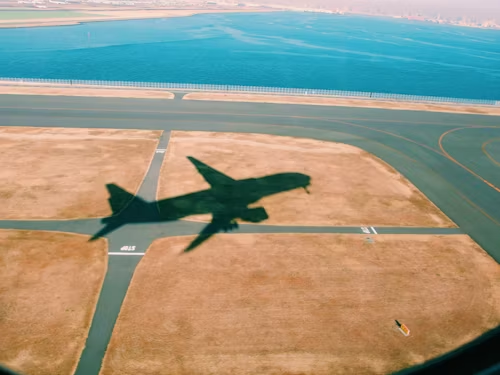
Look up. The blurred line in the sky isn’t just a plane – it’s history in motion. A family is on their way home for a long-awaited reunion. A doctor attends a medical conference with life-saving research. A student sees another continent for the first time. For generations, such journeys took weeks, if ever. Now they happen every day, quietly, above the clouds. The jet is not just a machine; It is a bridge between lives, cultures, and dreams – at an altitude of 35,000 feet, yet deeply rooted in what it means to be human.
Before jets, the world seemed vast, even out of reach. Seas were barriers. The mountains meant months of travel. But then the roar of the jet engine was heard – it was a force so powerful that it not only moved metal through the air, but also moved time. Suddenly, “long” became “a few hours”. Business deals can be negotiated face-to-face across all continents. Loved ones separated by the sea can hug again this weekend. A crisis can be met with quick help. The jet not only shrank the globe; It expanded what we thought was possible.
And in that vastness, something deeper changed: us. We began to think not only locally, but globally. We fell in love across borders. We tried new dishes, learned new languages, saw new skies – all because a plane made it normal. The jet plane transformed adventure from a luxury to a choice. It gave us access not only to places, but also to perspectives—to people whose lives were different, but suddenly close enough to understand.
So when you look at that little white line cutting across the sky, don’t just look at the technology. See connections. See hope. See the quiet courage of thousands of passengers who trust the sky, guided by the pilots, engineers, and crew who make it easy. Jet is more than steel and fuel. This is one of the greatest acts of mankind.
Table of Contents
1. The Shrinking World: From Weeks to Hours
Imagine telling someone a century ago that during simply seven hours, they could awaken in New York, sip espresso with the skyline outside their window, and by way of nighttime, be strolling alongside the Seine in Paris. They’d think you had been dreaming. Before jets, crossing an ocean wasn’t simply travel—it was an event. You packed for weeks, braved rough seas, and surrendered to the rhythm of the delivery. Distance supposed time, and time supposed sacrifice. The international felt vast, mysterious, and frequently out of reach.
Then came the jet—and in one roaring soar, it rewrote our experience of time. Suddenly, 600 miles according to hour wasn’t science fiction; it became Tuesday. That velocity didn’t just move us faster; it modified what we believed became viable. A business ride to Asia? Doable in a week. A wonderful place to go for your sister’s remote places? Just a weekend away. The jet didn’t dispose of distance, but it made it feel smaller, softer—like the globe had leaned closer, simply sufficient to whisper, You can come see me.
And with that shift, life itself started to stretch and bend. Families spread throughout continents ought to stay close. Students who studied abroad adore it has into a recurring. Crises could be met with a fast reaction. Weddings, funerals, reunions—moments that once required months of making plans or could have been missed entirely—have become available. The jet became “far away” from a final sentence right into a comma: I’ll be there quickly.
This isn’t just about convenience. It’s approximately a connection. The jet made the unusual familiar, the foreign friendly. It gave everyday humans the form of get right of entry to the arena that simplest royalty or adventurers once had. And in doing so, it didn’t simply reduce the globe—it improved our lives, one flight at a time. Now, when we take a look at a map, we don’t see obstacles. We see opportunities. And that exchange?
2. The Engine of Global Business and Commerce
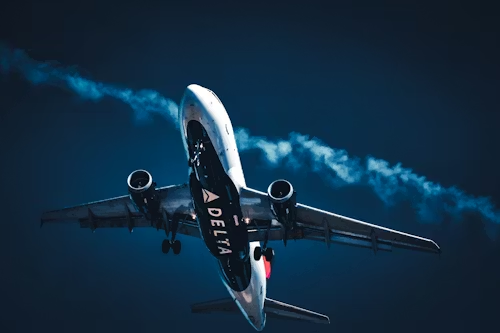
Imagine a world where every cross-border business decision requires weeks of travel, months of waiting, or endless telegrams that get lost in translation. That was the reality before jet planes. Today, a CEO can wake up in Tokyo, close a deal in Frankfurt in the evening, and be back in New York for his daughter’s concert – all in 48 hours. This is not a luxury; This is how modern business works. Jet is the invisible engine behind global trade, diplomacy, and innovation – transporting not just people, but trust, expertise, and urgency from one corner of the world to the other.
Consider what happens when a factory line breaks down in a foreign country. In the past, this could have meant several weeks of downtime, loss of revenue, and extensive delays. Now, an expert can be ready to board a plane with the tools, knowledge, and solutions within hours. Or consider a high-stakes conversation – where tone, eye contact, and shared coffee matter. Thanks to jets, diplomats and officials don’t have to rely on e-mail or video calls. They can sit across from each other, build real relationships, and seal deals that shape economies.
This speed has changed the way companies operate. Supply chains span continents but run with precision because people can follow the work. Companies hire the best talent, no matter where they live. The teams collaborate in person, then fly home – all within the same week. Ideas are sparked in one country, refined in another, and launched globally by Friday. The jet does not just carry passengers; It gives speed. This changes “one day” to “this week.”
And beneath that lies something deeper: relationships. JET has woven nations into a shared economic structure, where prosperity in one place can lift another. It is not without its challenges – but it has created a world where collaboration often means more
3. The Democratization of Travel
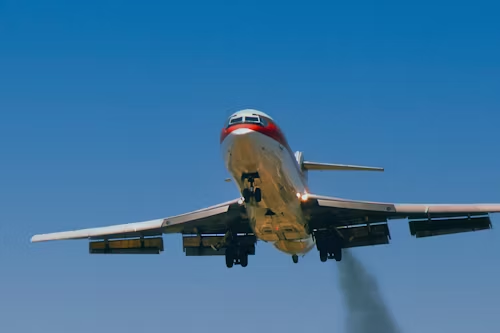
Until quite recently, flying was a dream of the rich – the kind of thing you saw in black and white movies: men in suits, women in hats, boarding planes as if entering another world. But today, if you look around the departure gate, you’ll see something much more beautiful: families with packed suitcases, students holding backpacks, grandparents visiting newborn grandchildren, and friends laughing over shared excitement. The jet has not only transported people – it has also opened the door for ordinary life to travel extraordinary distances.
This change did not happen suddenly. The power of jet engines, combined with larger aircraft that could carry more passengers, effectively changed everything. Airlines began to compete not only on comfort, but also on cost. Budget carriers emerged and made air travel as easy as a bus ride – sometimes even cheaper than a train ticket in your own country. Suddenly, that trip to visit cousins abroad was no longer a once-in-a-lifetime extravagance. It became something you could plan for, save for,r and actually do.
And what it has done for human connection is immeasurable. Grandparents attend school plays thousands of miles away. Young people spend the semester learning about cities they once only read about. Couples fall in love across borders. Entire families dispersed by migration or work can remain close, bound not just by memory but by actual, regular presence. Travel is no longer just about sightseeing; It’s about belonging – from multiple places, to broader stories, to a sense of being part of something bigger.
Jet aircraft didn’t just make travel faster. That made it human. It gave ordinary people a chance to explore, reunite, and move on from the place where they were born.
4. Unprecedented Levels of Safety and Reliability
Consider this: Modern jet engines are so reliable that they can run for thousands of hours before requiring major repairs. And what if one system fails? Someone else is ready to take over – sometimes two or three backups.
Your plane doesn’t just have one navigation system or one way to land; It has layers upon layers of redundancies, like a safety net woven in triplicate. Pilots train for years, spending hundreds of hours in simulators that recreate every imaginable emergency—from engine failure to a sudden storm—so that when they’re in the cockpit, they won’t react; They answer with practiced precision.
And then there’s the invisible web surrounding flight: air traffic controllers guide planes with satellite precision, ground crews inspect every bolt and wire, meteorologists track storms miles ahead. Even the turbulence that makes so many hearts race is but a bump in the road for a structure built by nature to handle forces far greater than those that normally come its way. You may feel the shock, but the plane? It is designed for this.
We rarely stop to appreciate the quiet wonder of it all. We climb in, fasten our seat belts, we roll on our phones – trusting them without thinking.
5. A Platform for Technological Marvels
Step into the cockpit of a modern jet and you’re not just looking at a control panel – you’re at the center of human innovation. It is calm, focused, full of soft lights and digital screens that paint the sky like a living story. There is no ugly steering wheel or spinning dial from an old movie. Instead, every movement is controlled by fly-by-wire technology – where computers turn the pilot’s touch into seamless, precise adjustments. This is not automation replacing skills; This technology enhances this, like giving a master musician a perfectly tuned instrument.
Outside the cockpit, the plane itself is a marvel born of decades of science. The wings don’t just fly – they are carved with such precision that even the slightest whisper of the wind can be discerned. Built from lightweight carbon composites and titanium alloys, today’s jet aircraft are stronger, lighter, and more fuel efficient than ever before. These ingredients? They are the ones promoting racing cars, prosthetics, and life-saving medical equipment. Flight is not separate from progress – it helps drive it.
And then there is navigation: GPS, satellite systems, and inertial guidance so precise that a jet can land safely even in thick fog, guided not by sight but by invisible signals and impeccable calculations. Wind tunnels and supercomputers have spent millions of hours honing every curve and angle to ensure this massive machine moves through the air like water over stone – smooth, efficient, almost effortless.
Every time a jet plane takes to the skies, it’s not just carrying passengers. It is full of human curiosity, problem-solving solving and the constant search for better, safer, and smarter ways to move around the world. It’s not just engineering. It is poetry written in metal and code – a silent tribute to what we can achieve.
6. The Birth of Cultural Exchange on a Massive Scale
Before jets, learning about another culture often meant reading a book, watching a bad movie, or waiting years for a traveler’s story. Comprehension was slow and distant—like looking at the world through a keyhole. But then came the transition age, and suddenly, millions of people could go straight into a different way of life.
Not as tourists passing by, but as witnesses, participants, even friends. The jet didn’t just move bodies; It carried curiosity, empathy, and the raw, living pulse of human culture from one continent to another.
Imagine landing in Kyoto and spending a few hours walking through a centuries-old temple, then later tasting matcha the same way it’s been done for generations. Or fly to Lagos and feel the rhythm of Afrobeat in your heart at a live concert.
These experiences are not just journeys – they are transformations. They change the way we cook, dress, think, and create. Food in Bangkok inspires a new family recipe. A dancing house, as seen in Brazil, joins a school performance. Ideas don’t just spread – they evolve, mi, and get richer with each journey.
And in that exchange, the walls begin to come down. Once you’ve dined with a stranger in Marrakech, cheered with the fans at a soccer match in Buenos Aires, or learned a folk song from a village elder in Vietnam, stereotypes lose their power. You don’t just learn about people – you feel them. Jet has transformed culture from something static and foreign to something fluid, shared, and alive. It has enabled artists, musicians, chefs, and athletes to reach global audiences not through pixels but through presence.
7. Speed as a Service: The On-Demand Economy
We live in a world that doesn’t like to wait. We expect next-day packages, messages will be answered within minutes, and new gadgets will be on our doorstep as soon as they’re released. But this hunger for speed didn’t come out of nowhere—it was born in the roar of jet engines whizzing through the sky. The modern “I want it now” culture is not driven solely by technology; It is powered by airfreight, the invisible highway above our heads that makes “impossible deadlines” an everyday reality.
Think of that bouquet of fresh roses on your kitchen table – grown in Kenya, flown thousands of kilometers and placed in your hands just days after being cut. Or the smartphone you unboxed yesterday, packed with components from several continents, assembled and shipped overnight to meet demand. This is not luxury delivered by magic. They arrive in the holds of passenger jets or in dedicated cargo ships that race across time zones while the world sleeps. Distance no longer means delay. Thanks to air travel, the world has become a single, fast-moving market.
And it’s not just consumer goods. Air freight saves lives. Emergency vaccines, scarce blood supplies, organ transplants – all depend on jet speed. A surgeon can prepare for the operation knowing that the donor heart will arrive within two hours. A remote clinic can get life-saving medicine within 24 hours. In these moments, every minute counts, and the jet becomes more than a machine: it is a lifeline that transcends urgency into the rhythm of global care.
8. Specialized Missions: Beyond Commercial Travel
When we think of jets, we imagine overcrowded cabins and boarding passes – but on a day-to-day basis with business travel, a different type of flying takes place. Silent, urgent, and often invisible, these special jets do work that has a profound impact on lives. Take the medical evacuation plane: Not just a plane, but a flying intensive care unit, equipped with monitors, oxygen lines, and skilled doctors who care for a critically ill patient in the air. For someone in a remote village or on an airplane, the airplane isn’t a convenience—it’s hope. It can get them to life-saving care in hours instead of days, turning a death sentence into a second chance.
Then there are private jets – often seen as the epitome of luxury, but for men,y they are necessary tools.
Beyond emergency response and executive travel, jets serve science in cool, powerful ways. High in the stratosphere, specially equipped aircraft fly above storms and pollution, collect data on climate change, track greenhouse gases, and even peer into space beyond much of the atmospheric disturbances.
These flying laboratories help us understand our planet and its delicate balance, providing insights that no satellite or ground station alone can capture. The jet becomes a guardian of knowledge, helping us see the bigger picture – one flight at a time.
9. The Tourism Economy: A Global Industry
Look at any postcard-perfect island, old town, or stunning national park, and you’re likely to see two things: beauty and a nearby airport. This is not a coincidence. The roar of jet engines has become the heartbeat of countless economies around the world.
From the Maldives to Marrakech, from Bali to Buenos Aires, entire countries have built their livelihoods on the simple miracle that people can board a plane in one country and be in another within hours. Tourism—now a trillion-dollar global force—isn’t possible just because of jets. It exists because of them.
Behind every traveler who takes photos at Machu Picchu or drinks coffee in a Parisian cafe, a web of lives is affected by that trip. A local guide shares stories passed down through generations. A family-run guest house, the rooms are full. A fisherman sells his fish to a seaside restaurant full of visitors.
Pilots and flight attendants are just the beginning. Thousands of jobs – hotel cleaners, taxi drivers, craftsmen, cooks, and park rangers – are booming because someone decided to “jet off” for a week. For many communities, especially in developing regions, tourism is not just an industry; It’s a lifeline.
And when travelers come, they don’t just spend money – they seek attention. Historic temples are being restored, coral reefs are being protected, and traditional crafts are finding new markets. When a village’s culture or landscape is valued by the world, it gets a fighting chance against neglect or destruction. Tourism, fueled by air travel, gives meaning and economic purpose to preserving the precious. It makes heritage and nature values worth preserving, not only for tourists, but also for future generations of local people.
10. The Unmatched Feeling of Freedom and Perspective
There is something deeply human about a plane leaving the ground. It’s not just machinery and physics – it’s hope on the run. As the jet roars down the runway and your seat gently lifts beneath you, it’s hard not to feel a rush of emotion. In that moment, the weight of daily stress begins to dissolve, replaced by a quiet awe. You are no longer alone in the world – you rise above it, if only for a few hours.
When you look out the window, the world becomes almost poetic. Roads become delicate threads that link cities together; Rivers shine like ribbons in the sunlight, And the clouds float close enough to touch them. From here, everything looks small – including your problems. It’s a rare kind of clarity, one that reminds you just how big life really is, and how much lies beyond your normal perspective.
This feeling – what some call “jet freedom” – is not about luxury or speed. It’s about opportunity. It’s the quiet promise that adventure is still within reach, that a new city, a long-lost friend or a pristine beach could be just a few hours away. The freedom to move on, to explore, to start over, is one of the great gifts of modern travel. And it belongs to everyone with a ticket and a dream.
Q: Are private jets only for the ultra-wealthy?
A: Not anymore. Jet cards, fractional ownership, and on-demand charter services make private jet travel more accessible than ever.
Q: How safe is private jet travel compared to commercial flights?
A: Equally—or more—safe. Private jets operate under strict FAA regulations, often with newer aircraft, elite pilots, and lower passenger volumes.
Q: Can I contribute to flight safety as a private jet passenger?
A: Absolutely. Following crew instructions, securing loose items, and communicating needs clearly all support a safer, smoother journey.