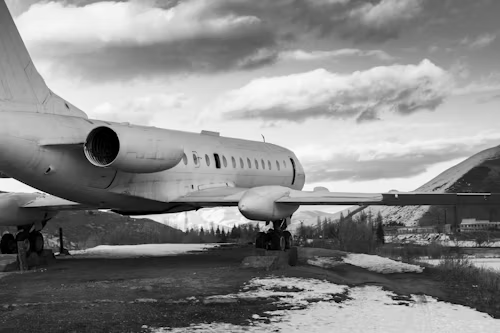
Look up. That skinny, white line scratching the endless blue canvas of the sky is extra than just an aircraft. It’s a promise stored. It’s a boundary damaged. It’s a jet. For a lot of us, the sight of a jet streaking overhead in no way gets old. It’s a symbol of human ambition, a tiny, shining speck of “what if” that we made actual.
The story of the jet isn’t always just a tale of engineering. It’s a human tale. It’s a tale of superb minds, courageous pilots, and a world that shrank, linked via the invisible highways inside the air. Every iconic jet ever built has left us with something greater than just a system; it has left us with a lesson. These instructions are etched into their metallic frames and the roar of their engines. They are timeless, and they manual us not simply in how we fly, but in how we dream and gain.
Let’s take an adventure via aviation history and explore five undying lessons from the most legendary jet aircraft ever to grace our skies.
Table of Contents
Lesson 1: The Power of a Simple, Elegant Idea
Before we talk about what this was, let’s talk about what it looked like. Imagine it’s World War II. For years, the sound of war in the air has been the deep, stifling sound of propeller engines. Then, one day, Allied pilots reported something new. Something scary. An airplane without a propeller moves so fast that it seems as if it is cutting the air itself. This was the German Messerschmitt Me 262, the world’s first operational fighter.
The text of the Me 262 is not about its origins in warfare; It’s about the enormous power of a basic idea. Designers looked at the complicated, terrifying mess of propellers and said, “What if we simplified this?” Instead of rotating blades that pulled the plane, they used an exhaust jet that pushed it. This was a revolutionary jet propulsion concept.
The idea was beautiful: draw air in, compress it, mix it with fuel, ignite it, and blast it out the back. Simple in theory, extremely difficult in practice. But that simple idea changed everything. The Me 262 was nearly 100 mph faster than any Allied fighter. It was a shock, a leap so deep that it made all other advanced aircraft look instantly outdated.
Lesson 2: Beauty is More Than Skin Deep – The Lockheed Constellation

Now let’s switch gears. After the war, jet engines were still a scary new technology, mostly for fighters. The world of passenger travel was still one of beautiful, propeller-driven airplanes. But one plane was so beautiful it was practically a work of art. This was the Lockheed Constellation, or “Connie”. And while it wasn’t a jet per se, its spirit led directly to the creation of one of the most beautiful jets of all time.
Connie had curves. The torso was a graceful, dolphin-shaped body, and its triple tail made it unmistakable. Pilots and passengers loved it. It wasn’t just a machine; It was an experience. This proved that beauty is important in transport. It creates an emotional connection.
This lesson was not lost on Lockheed engineers when they set out to create a jet that could spy behind enemy lines at heights where no other aircraft could reach. The result was the Lockheed U-2, a jet aircraft with incredible performance. But its successor, the SR-71 Blackbird, took lessons from Koni and turned it into a legend.
The SR-71 Blackbird is arguably the most amazing jet ever built. It feels like it’s from the future, even today. Its long, black, radar-absorbing body is pure function—every curve and line is designed to slip and slide through thin air at speeds more than three times the speed of sound. But by solving these brutal engineering problems, they created something of stunning beauty. This jet is a masterpiece where every aesthetic choice is an engineering necessity.
Lesson 3: The Courage to Leap into the Unknown – The de Havilland Comet
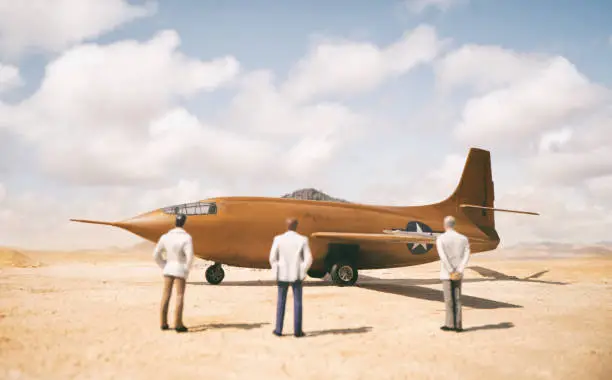
Every revolution has its pioneers, and they often pay a heavy fee. In the business aviation sector, the pioneer became the de Havilland Comet. This turned into the arena’s first business jet airliner. While others were cautiously sticking with propellers, de Havilland took an enormous jump. For the first time, the general public could tour on a jet.
The Comet became a sensation. It became quiet, smooth, and flew excessively above the weather. It turned into destiny. But then, tragically, several Comets broke apart in mid-air. The whole fleet was grounded. The dream of a jet tour appeared to be over before it truly began.
The problem wasn’t the jet engine itself, but some thing engineers had by no means encountered earlier than: steel fatigue. The repeated pressurization and depressurization of the cabin led to microscopic cracks in the structure, which eventually caused catastrophic failure. The research becomes long and painstaking. De Havilland had to face public scrutiny and heartbreaking failure.
But here’s the essential element: they didn’t surrender. They found out. They absolutely redesigned the Comet with rounded home windows and a more potent shape. The understanding received from the Comet’s screw ups became the bible for each jet airliner that observed, such as its maximum hit rival, the Boeing 707. The 707 learned from the Comet’s tough-earned lessons and successfully delivered the jet age to the masses.
The Timeless Lesson: Innovation requires the bravery to fail. The de Havilland Comet’s tale isn’t always a tragedy; it’s a lesson in resilience. Every extraordinary leap ahead is constructed with the instructions of stumbles. This pioneering jet taught the entire industry an essential lesson about protection that resonates to at the present time. It reminds us that to obtain something notable, we have to be inclined to assignment into the unknown, and whilst.
Lesson 4: The Right Tool for the Right Job – The Boeing 747 “Jumbo “
For decades after the Comet, travel became more common. But it was still largely for the wealthy and business travelers. Then came a plane that democratized the sky. It was a jet so big, so bold, that it needed a new name: “Jumbo Jet.” This was a Boeing 747.
The 747 was not just an evolution; This was a revolution in scale. Its distinctive hump made it the most recognizable jet in the world. But its real genius wasn’t just its size; This was the purpose. It was designed to inspire the masses. By carrying more passengers, ticket prices fell, making international travel accessible to the middle class for the first time. This specific jet didn’t just fly people; It shrunk the planet.
The 747 is the best example of a perfect instrument designed for a specific task. It wasn’t the fastest jet (that was Concorde), nor was it the fastest. But it was perfectly suited to the task: efficient, reliable, long range, and high capacity. It became the backbone of global trade and tourism, a platform that connected continents and cultures. It was the right jet at the right time.
Timeless lesson: Excellence comes from complete alignment with purpose. You don’t use a sledgehammer to crack walnuts, and you don’t need a supersonic jet for family vacations. The lasting legacy of the 747 is a lesson in focused design.
Lesson 5: A Legacy of Connection and Hope
So, what is the final, overriding lesson of jet history? Looking at the journey – from the war-born Me 262, to the beautiful SR-71, the ground-breaking Comet, and the people’s jet, to the 747 – a common thread emerges.
The ultimate legacy of jet is connectivity.
Before jets, oceans were large, intimidating obstacles. Family members who moved abroad may never see their home country again. The business was mainly local or national. The world was a collection of remote, isolated societies.
The Jets changed all that. It created bridges of air. This turned a 12-day boat trip across the Atlantic into a 7-hour flight. It allowed a student to study abroad, a business to go global, and a family to reunite for the holidays. This remarkable jet technology, born in conflict, evolved into one of humanity’s greatest tools for peace, understanding, and economic development.
Every time a plane takes off, it has more baggage than passengers and cargo. There is hope in that – hope for a better life, hope for reunion, hope for a new beginning. It fulfills the human desire to discover, connect, and understand. The low roar of a jet plane rising into the sky is the sound of the world getting smaller, and thus becoming more familiar, friendlier, and more connected.
Jet’s legacy is one of hope. It’s a testament to our ability to take a scary technology and turn it into a force that brings us all closer together. It’s a promise that no matter how far away we are, we’re always just a flight away.
So the next time you see that tiny silver ray creating a white line in the sky, remember the lesson it teaches. Remember the greatness of a simple idea, the beauty of clean work, the courage to pioneer, the knowledge of the right tools, and the profound power of thought.
1. What makes a jet “iconic” in aviation history?
An iconic jet isn’t just about performance—it’s about impact. These aircraft revolutionized travel, broke barriers (technical, social, or geopolitical), captured public imagination, and often became symbols of an era—like the Concorde representing luxury and speed, or the DC-3 embodying reliability during aviation’s formative years.
2. Are any of these legendary jets still flying today?
Yes! While many have retired from commercial service, several iconic jets live on in museums, private collections, or specialized roles. For example, a few vintage Boeing 707s and DC-8s still operate as cargo or government aircraft, and restored warbirds like the B-52 Stratofortress remain in active military service—over 70 years after their first flight.
3. What can modern travelers learn from these historic jets?
They remind us that innovation requires vision, safety is built on lessons from the past, and air travel is a privilege rooted in decades of engineering courage. They also inspire mindfulness in flight—honoring the journey, not just the destination.