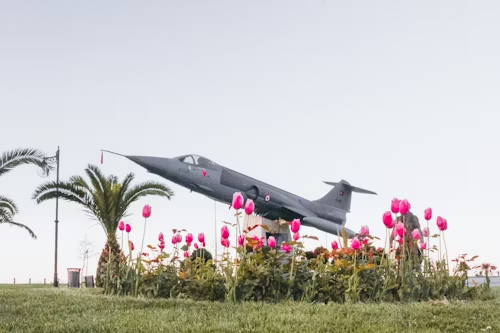
Look up to the sky. What do you see? Maybe some wispy clouds, the sun, and sometimes a small, distant white line that finds its way into the blue. It’s a jet, and for most of us, it’s the epitome of long-haul vacations or business trips. It’s something we use a few times a year; it’s an exception to our normal lives. But what if that changes?
What if it was meant not only to cross continents, but to transform our daily commutes and how we connect to the world?more than just a cool new way to travel. It is about solving some of our most stubborn problems – traffic, time, and distance. So fasten your seat belt and get ready to go. Here are five revolutionary reasons why the humble jet is set to become the future of mobility for all.
Table of Contents
1. Conquering the Tyranny of Traffic
Let’s start with the problem everyone knows well: traffic. This is more than an annoyance; This is a huge blow to our economy, the environment, and our sanity. The average American spends about 51 hours a year in traffic. Two full days of your life every year are spent looking at a bumper.
Imagine another scenario. Instead of joining the rush of cars on the highway, you drive a short distance to the local “vertiport”. A sleek, quiet vehicle awaits. It looks futuristic, but at its heart is a proven technology: a sophisticated jet propulsion system. This is not a helicopter with tall, jagged blades; It is an electric or hybrid-electric jet aircraft designed for vertical take-off and landing (VTOL). You come in, and within minutes you’re out of gridlock.
This new type of jet does not need a long runway. It takes off straight up, then the engines tilt, and it moves forward quickly like an efficient winged airplane. The traffic jam below becomes a calm, slow-moving river of light as you cruise effortlessly toward your destination. This jet is not a luxury for anyone; This is a practical solution for many, turning a two-hour crawl into 15 minutes. Taken to the third dimension, this jet technology fundamentally destroys the concept of transportation as we know it.
2. The Gift of Time: Reshaping Our Concept of Distance
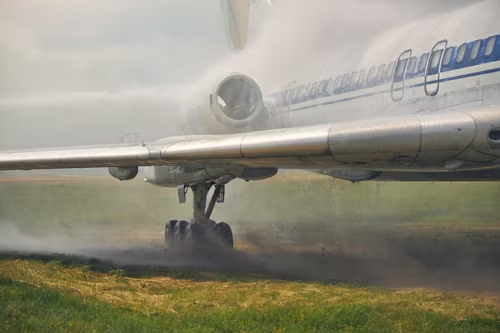
Time is our most precious resource, and conventional have already given us the incredible gift of shrinking the planet. You can have breakfast in New York and dinner in London. But the next leap is linked to the shrinking of our regions and cities.
Consider the “100-mile rule.” Within a 100-mile radius are business opportunities, family members, medical experts, and cultural events that we often overlook because the drive is too burdensome. The two-hour drive each way is a significant commitment. But in modern, efficient jets designed for short-haul travel, a 100-mile trip can take less than 30 minutes.
What does this mean in human terms?
A farmer from a rural community can go to a big city immediately to sell produce in a premium market and stay home for lunch.
A specialist doctor can go from a central hospital to provide critical care to several district clinics on the same morning.
You can live in a more affordable, peaceful community away from an urban area without sacrificing access to your job. Your journey will be a short, comfortable jet journey.
This is not science fiction. Companies are already testing air taxi services that use the same jet-VTOL technology. Powerful but compact jet engines make this possible, turning huge geographical distances into modest journeys. It gives us back our time and with it our freedom. Time is our most precious resource, and conventional jets have already given us the incredible gift of shrinking the planet. You can have breakfast in New York and dinner in London. But the next leap is linked to the shrinking of our regions and cities.
Consider the “100-mile rule.” Within a 100-mile radius are business opportunities, family members, medical experts, and cultural events that we often overlook because the drive is too burdensome. The two-hour drive each way is a significant commitment. But in modern, efficient jets designed for short-haul travel, a 100-mile trip can take less than 30 minutes.
What does this mean in human terms?
A farmer from a rural community can go to a big city immediately to sell produce in a premium market and stay home for lunch.
A specialist doctor can go from a central hospital to provide critical care to several district clinics on the same morning.
You can live in a more affordable, peaceful community away from an urban area without sacrificing access to your job. Your journey will be a short, comfortable jet journey.
This is not science fiction. Companies are already testing air taxi services that use the same jet-VTOL technology. Powerful but compact jet engines make this possible, turning huge geographical distances into modest journeys. It gives us back our time and with it our freedom.
3. The Green: A Surprising Eco-Warrior
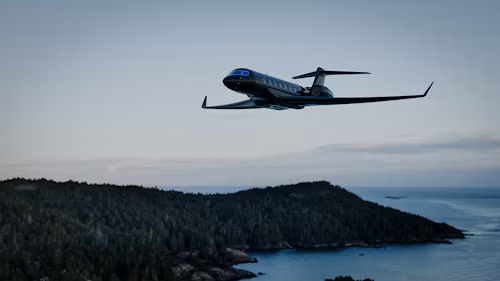
When you hear the word ‘jet’, you might not immediately think ‘eco-friendly’. Traditional aviation has a significant carbon footprint. But the jets of the future are different. It is being reconstructed from the ground up with sustainability as the core principle.
The revolution is taking place in two key areas: electrification and new fuels.
First, electric jet propulsion is no longer a fantasy. While battery technology is still being developed for transatlantic flights, it is perfectly suited for short-hop missions that will define the new air mobility market. An electric jet produces zero emissions at the point of use. It is incredibly quiet compared to a helicopter or small plane, reducing noise pollution – a key factor in community acceptance. The low hum of electric jets will become the background sound of a clean, smart city.
Core jet engine technology is adaptable, ready to run on these clean energy sources as they become more widespread. So the next generation of jets will not only be faster; This would be a responsible choice for a planet that needs a break. This is a cornerstone in building a sustainable future for green jet transport.
4. The Ripple Effect: Boosting Economies and Connecting Communities
The effect of a new jet-powered mobility community won’t prevent from getting you to your paintings faster. It will create a powerful ripple impact that revitalizes economies and connects communities in new ways.
Job Creation: This is a whole new industry. We’ll need humans to design, build, preserve, and fly those new vehicles. The demand for aerospace engineers, software program developers, battery experts, and pilots for this new class of jet will skyrocket. Local vertiports will want managers, safety, and provider groups of workers, creating jobs in groups massive and small.
Revitalizing Rural Areas: As mentioned, distance will become much less of a barrier. This can opposite the “brain drain” from rural areas. Why circulate to a steeply-priced metropolis for a very good task when you can jet there in minutes? Small towns should enjoy a renaissance as appealing locations to live, with smooth access to urban facilities. A reliable jet provider can also ensure rapid shipping of medical components and different essential items to faraway locations, enhancing the quality of life for everybody.
New Infrastructure: We will see a wave of innovation in infrastructure. Vertiports could be constructed on rooftops, in unused business regions, and on the edges of cities. This is not about large airports; it is approximately a dispersed, included network of small hubs. This new infrastructure could be designed for the seamless jet age, incorporating charging stations and digital booking structures. The very fabric of our cities will evolve to include this new layer of transportation.
5. The Magic of Accessibility: Making the Sky a Public Space
Perhaps the most revolutionary trade is the democratization of the sky. For most of aviation records, flying a jet turned into the special domain of distinctly skilled pilots and the extremely wealthy. The future is distinct.
The new era of jet automobiles is being built with autonomy in mind. Just as we’re getting used to the concept of self-driving automobiles, we have to prepare for self-flying planes. The onboard computer systems dealing with the flight route of a jet are infinitely greater precise and reliable than a human driving force on a hectic street. You won’t need a pilot’s license to apply for an air taxi; you’ll just need a cellphone app.
Book a ride, show up at the vertiport, and the autonomous will accurately and correctly take you where you want to go. This brings the value down dramatically, making it a feasible choice for a much larger phase of the population. It’s the ultimate form of public transportation—a personalized, on-call public jet service.
This accessibility unlocks human potential. It lets in for extra spontaneous connections, greater efficiency in business, and a life less bound by the constraints of the ground. The sky turns into a public application, a shared useful resource for all and sundry to apply.
6. The Final Approach
The path to this future is not without challenges. We must build public trust, create new air traffic control systems for crowded skies, and ensure that these advances are safe and fair for all. But the path is clear. The technology of this transformative jet still exists today.
The engine, once a symbol of the unaffiliated, global elite, is having a rebirth. It is becoming the key to a more connected, efficient, and sustainable world. It’s about giving back our time, healing our planet, and opening up our communities. The future of mobility is not fast cars or smart trains. It is a leap—a leap—up into the sky. And that future is coming sooner than you think.
Q1: Are private jets really becoming more accessible?
A: Yes! Advances in fractional ownership, jet-sharing platforms, and eco-efficient models are making private jet travel more affordable and sustainable than ever.
Q2: How do jets improve travel efficiency compared to commercial flights?
A: Jets bypass long security lines, crowded terminals, and layovers—offering door-to-door travel that can cut total trip time in half.
Q3: Are jets incorporating green technology?
A: Absolutely. Next-gen jets are adopting sustainable aviation fuel (SAF), electric-hybrid propulsion, and AI-optimized routing to reduce emissions and noise.