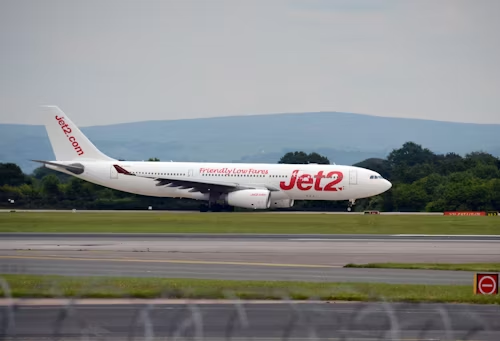
Look up at the sky on any given day, and you’ll see them: sleek, silver shapes tracing swish contrails across the blue expanse. The jet. It’s more than just an aircraft; it’s the undeniable champion of cutting-edge air travel, the engine that shrank our world. From the moment the primary commercial jet roared to life, it revolutionized not simply how we fly, however how we stay, work, and join.
But why is the jet ideally suited? What characteristics have cemented its vicinity as the unmatched sovereign of the skies? The answer isn’t just about velocity. It’s a tale of first-rate engineering, financial alchemy, and a profound impact on the human revel in. Let’s climb through the reasons, one after the other, and attain the jet zenith.
Look up in the sky at any time, and you will see them: smooth, silvery shapes, tracing beautiful lines across the blue expanse. Jet. It’s more than just an airplane; It is the undisputed champion of modern air travel, the engine that made our world smaller. From the moment the first commercial jet came to life, it revolutionized not only the way we move, but how we live, work, and connect.
Table of Contents
1. The Unmatched Gift of Time: Speed as a Currency
Before the jet age, long-haul travel was a grand affair. Propeller planes continued to spin in the air, making the journey across the ocean an all-day (or several days) endeavor. The main magic of the jet engine is its amazing speed. By compressing air, mixing it with fuel, and igniting it to produce a powerful, sustained thrust, a jet can fly at speeds approaching the sound barrier.
This change transformed travel into commuting. The Atlantic Ocean, once an impassable barrier, becomes a pond you can cross during a movie marathon and a meal. This time savings is Jet’s primary offering. In our globalized world, time is the ultimate currency. Businesses rely on it to connect international offices, families use it to bridge continents, and aid organizations deploy it to reach disaster zones. Jet aircraft didn’t just make travel faster; It made the world’s clocks run differently, compressed tim,e and expanded possibilities.
2. Scaling the Heights: The Smoothness of the Stratosphere
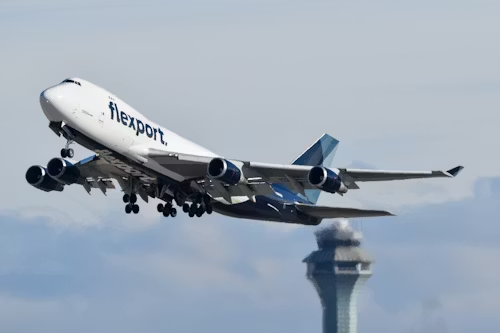
A jet doesn’t just fly faster; It flies high. Modern jet aircraft fly comfortably between 30,000 and 40,000 feet comfortably, operating in the cool, thin air of the lower stratosphere. This is a master move. Up here, above most weather systems, the ride is remarkably smooth. The gut-wrenching bumps and drops associated with turbulence are significantly reduced, making the passenger experience more comfortable and predictable.
Furthermore, this efficiency at high altitudes is important. The thinner air creates less drag on the fuselage, allowing the engine to work more efficiently to maintain speed. Flying a jet at this altitude is like a long-distance runner finding his perfect, steady speed on a flat track – it’s the sweet spot for performance and passenger comfort.
3. The Economic Engine: Making the Sky Affordable
It may additionally seem counterintuitive, however, the outstanding power of a jet is also what made flying low-cost for the loads. The performance of present-day high-skip turbofan jet engines—in which a large fan at the front acts to a huge extent of air around the core engine, providing maximum of the maximum thrust—is a miracle of economics. These engines carry greater people, use much less fuel consistent with seat, over longer distances than any predecessor.
This economies-of-scale impact is the muse of the complete commercial airline enterprise. It permits vendors to offer hundreds of seats on a unmarried plane , driving down the fee in step with price per ticket.
The dream of flight, as soon as reserved for the wealthy elite, was democratized by means of the plane . That package from across the United States of America, that final-minute visit to a grandparent, that price range European holiday—all are powered by the relentless financial common sense of the current jet.
4. Global Connectivity: The World in a Network
Find flight routes on the world map. They form a dense, glittering web that connects both megacities and remote islands. This is Jet’s true masterpiece: the global network. No other means of transport can connect two points on the planet so easily within a day. A plane to Tokyo might be in Paris for dinner; A plane in Cape Town might be in New York for a meeting.
This network is the communication system of our global civilization. It not only transports people, but also important parts of our daily lives: fresh produce, important medical equipment, electronics, and mail. It enables multinational teamwork, boosts tourism industries that support millions of jobs, and allows cultures to mix and interact directly. Jet is the physical Internet, making our planet feel like a single interconnected community.
5. Reliability and Safety: A Culture of Perfection
The modern plane is arguably the safest and most reliable form of mass transportation ever created. This is not an accident. This is the result of an uncompromising, globally coordinated security culture that has developed around jet technology. Every component of the plane , from its redundant hydraulic systems to its multiple independent flight computers, is designed with failure in mind. The philosophy is simple: if one system fails, another seamlessly takes its place.
This reliability extends to the fantastic maintenance regime. Eachplane follows a meticulous schedule of checks from overnight inspections to major overhauls, ensuring that every part meets a strict standard.
6. A Cabin for All: The Versatility of Design
The basic plane fuselage is a marvel of adaptability. The same basic tube-and-wing design can be configured in a variety of ways to serve different markets. A single-aisle plane such as the workhorse Boeing 737 or Airbus A320, provides full service on high-frequency short- to medium-haul routes with 150-200 passengers.
A wide-body, twin-aisle jet, such as the Boeing 787 or Airbus A350, can carry more than 300 people across oceans in comfort.
This versatility means an airline can use the same family of jets for a 90-minute hop and a 14-hour journey. Shipping companies use dedicated cargo plane variants, their elevated structures filled with pallets. There are business jets for personal travel and militarized jets for defense. The chameleon-like ability to perform a myriad of missions ensures the jet’s relevance in any aviation sector.
7. The Innovation Flywheel: Continuous Improvement
Aircraft’s reign is not stable; This is a story about sustainable development. The jet engine itself is in constant improvement. Each new generation aims for greater fuel efficiency (reducing costs and environmental impact), lower noise emissions (benefiting local communities around airports), and increased power. The modern engines of the latest jet aircraft are marvels of engineering, constructed from lightweight composite materials and with gear systems that allow the fan and turbine to rotate at optimum speed.
The airframe design follows. The use of carbon composite materials, as seen in the Boeing 787 Dreamliner, makes the jet lighter, stronger, and more resistant to corrosion. Wing on the wingtips reduces air resistance.
This constant pursuit of improvement means today’s plane are quieter, cleane,r and more efficient than ever before, maintaining a constant edge over any potential competitor.
8. Symbolism and Aspiration: The Aircraft as an Icon
Beyond physics and economics, the Aircraft has a strong place in the human imagination. It is a universal symbol of progress, modernity, and freedom. Seeing a jet plane fly overhead creates a sense of aspiration and human achievement. For a child on their first flight, the jet is a gateway to wonder. For the immigrant returning home, it is a vessel fora heartfelt reunion. For a business traveler, it is a tool of ambition.
Aircraft represents our collective desire to explore, connect, and push boundaries. It turned exotic postcards into real travel destinations. This cultural and psychological force is intangible but immense. We don’t just get on the jet; We keep a promise – a promise of a new place, a new beginning or a dear return.
9. Unrivaled Range: Conquering Geographic Limits
The combination of efficiency and power gives modern long-range jets an astonishing range. Aircraft such as the Airbus A350 or Boeing 777 can fly more than 8,000 nautical miles without stopping. This possibility has made previously “remote” places accessible and created new, direct city pairs that bypass traditional centers.
Do you want to fly direct to London from Singapore to New York or Perth? There’s a Aircraft for that. The committee strengthens new economic and cultural relationships and promotes direct trade and tourism between remote regions. This means that a researcher in Chile can collaborate directly with a laboratory in Australia without having to travel 2for 4 hours. Jet range has effectively redrawn the map of practical human travel.
10. The Foundation of an Ecosystem
Ultimately, plane’s dominance is self-reinforcing because it forms the basis of a vast, global ecosystem. Airports are designed for jet operations. There is a billion-dollar manufacturing industry to create and maintain them. A global supply chain provides everything from special alloys to advanced avionics. Hundreds of thousands of highly skilled jobs – pilots, engineers, dispatchers, air traffic controllers – are dedicated to jet aircraft.
This ecosystem creates excessive inertia. Any potential challengers to the Jets don’t just need to get better; It would require uprooting an entire, deeply entrenched world of infrastructure, regulation, and expertise planeIndustries. The sun is at the center of the solar system, and its gravitational pull is enormous.
11. Reaching the Zenith
The plane is a testament to human ingenuity, from its thunderous flight to its whisper-quiet descent. It dominates air travel, not through any single function, but through its synergistic combination: the raw gift of speed, the quiet calculation of economy, the strong promise of safety, and the profound ability to connect human lives.
It has shortcomings and faces challenges, particularly its environmental footprint – a challenge the industry is pushing for with sustainable fuels and next-generation jet technology. Nevertheless, its position in the near future is unassailable. The jet shrank the world, built our global economy, and turned strangers into neighbors. When we see the familiar shape against the clouds, we see more than transport.
We see the vehicle of our modern age, a powerful plane, bringing us closer together, despite all our complexity. It has truly reached its pinnacle, and from that height, the view of our connected world is extraordinary.
Q1: Why are jets considered superior to propeller aircraft for air travel?
A: Jets fly faster, higher, and smoother—offering reduced travel times, better fuel efficiency at altitude, and a more comfortable passenger experience with less turbulence.
Q2: Are private jets safer than commercial airlines?
A: Both adhere to rigorous safety standards, but private jets often operate from less congested airports with enhanced maintenance protocols and personalized crew attention, contributing to a perception—and often reality—of elevated safety and control.
Q3: How do modern jets support passenger well-being during flight?
A: Advanced cabin pressurization, humidity control, and air filtration systems in modern jets help reduce fatigue, jet lag, and anxiety—making air travel not just efficient, but genuinely restorative.