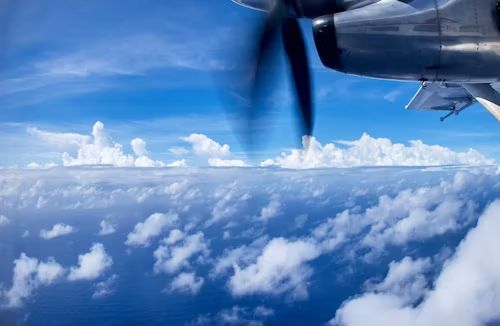
For many people, the idea of flying creates a familiar wave of anxiety – a cocktail of claustrophobia, turbulence, and loss of control. But what if we see it all wrong? What if, beneath the routine stress of security lines and cramped seats, there exists a strong, almost forgotten possibility for peace?
Traveling by jet can be one of the most calming, perspective-shifting experiences we have regularly. It’s not about enduring the flight, but about learning to embrace the unique sanctuary that the jet cabin provides. Let’s wrap up your journey and discover ten unique reasons why your next flight can be a source of peace, not fear.
Table of Contents
1. The Gift of Enforced Disconnection
In our hyper-connected world, true disconnection is a luxury we rarely allow ourselves. Enter the modern jet. When the airplane mode switch is flipped, a silent contract is signed. For the next few hours, you are lucky enough to be officially unavailable. The flurry of emails, the din of social media notifications, the demands of the outside world – all fade to a distant hum, quieter than jet engines.
This is not a loss; This is a liberation. This is a rare piece of time you get, without guilt, to read, think, just be, without expecting an immediate response. The low roar of the jets becomes a wall of white noise, shielding you from the digital chaos and giving you a peace that seems ever more valuable.
2. The Humble Perspective of Altitude
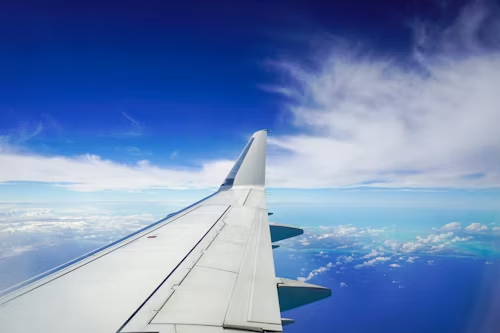
As the jet climbs, the world literally expands. Houses shrink to dots, cars become silent particles, and the sprawling city turns into a neat miniature map. The looming problem at work, the frustrating traffic jam you’ve left behind, the nagging worry about a minor task—all have been left physically and metaphorically shrunk under the clouds. From 35,000 feet, your perspective widens with power.
You see large beaches, stretches of land, and lovely bends of rivers. This visual change has a powerful psychological effect. It whispers that the world is big, your place in it is both small and important, and most of our daily problems are not as big as they seem. The beam doesn’t just transport your body; It can take the burden off your mind.
3. The Rhythm of the Journey
Flying has a specific, predictable rhythm that can be extremely calming: orderly boarding, safety demonstrations, powerful taxi to the runway, the exhilarating pressure of take-off, climb to cruising altitude, gentle descent, and a final, smooth touchdown.
This rhythm is a story with a clear beginning, middle, and end. In contrast to the often fragmented and interrupted nature of the workday, A Flight is a complete, contained narrative.
4. A Sanctuary of Anonymity
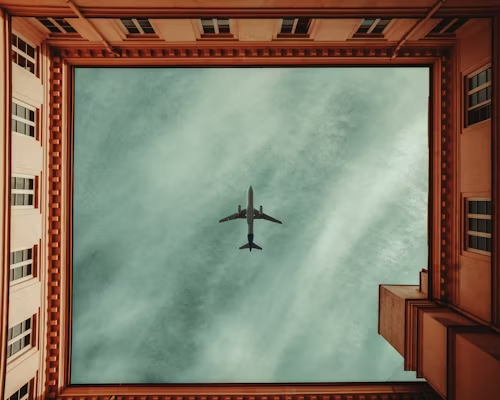
In the cabin of a jet, you’re wonderfully anonymous. To your fellow passengers and the team, you are in reality someone in Seat 27B. There are no records, no preconception, no role to play. You are not “the boss,” “the caregiver,” “the busy determine.” You are just you, unobserved and unburdened through your everyday identity.
This anonymity may be a profound alleviation. It lets in for quiet introspection or pure, unproductive rest. You can stare out the window for an hour without judgment, lose yourself in a singular, or nstare ear your eyes and concentrate to track. The jet cabin is a neutral space, a temporary haven in which you exist between duties, unfastened from performance.
5. The Celestial Theater at Your Window
For the window-seat fanatic, a flight offers a front-row seat to the most spectacular, ever-changing show on Earth: the sky. A jet places you within the weather, no longer under it. You can watch a lightning hurricane silently flash like celestial fireworks a ways below, at the same time as your course remains smooth.
You can chase the sundown for hours, looking at the sky melt through a spectrum of oranges, pinks, and deep purples. You can fly above an apparently limitless cotton subject of clouds, a landscape of pristine white under a dome of tremendous blue.
At night, the stars are clearer, and the scattered constellations of city lighting fixtures twinkle with a quiet mystery. This connection to the herbal grandeur above and across the jet is an effective antidote to worry, replacing it with awe.
6. The Shared, Silent Humanity
Look around the cabin. A student studying notes, a grandparent snoring softly, a couple sharing a set of headphones, a business traveler reviewing a presentation. Each person on board has a story, a destination, a reason for the journey. But here you all share this unique experience, flying silently together in the sky in a metal tube.
There is a shared, latent humanity in it. The gentle nod to a seatmate when you stand up, the collective slight groan of a spot of light disturbance, the universal rustling of snack bags – these are small connecting threads.
You are part of a temporary, silent society, relying on the same science, the same pilot, the same jet to carry you safely forward. This shared belief can be quietly comforting.
7. The Triumph of Trust (and Engineering)
Let’s be clear: survival is a miracle. The fact that a multi-million-pound vehicle can soar gracefully through the air is a staggering testament to human ingenuity, physics, and meticulous care.
Each jet is a masterpiece of engineering, maintained by dedicated teams of technicians who follow protocols with near-surgical precision. The pilots guiding your jet are among the most highly trained and consistently rated professionals on the planet. Seeing your flight not as a leap of faith, but as the result of countless hours of expertise, rigorous science, and mandatory safety checks, can turn worry into admiration.
The captain’s calm, steady voice providing updates is not just information; It is a reminder that you are in capable hands. A steady hum is the sound of reliability.
8. A Blank Canvas for Creativity and Reflection
The undisturbed, limited time on the jet is fertile ground for the mind. Without you normally attracting attention, thoughts have room for the surface. Many people find that they make their best ideas in the air. This is the perfect time to journal, sketch, brainstorm, or just let your mind wander without an agenda.
The gentle, calm atmosphere of the cabin can transport the conscious mind into a state where creative connections are made more easily. Whether you’re using the time to plan your dream vacation or finally draft that novel you’ve been thinking about, the jet cabin becomes a creative studio in the sky.
9. The Anticipation of Arrival
Peace does not always mean peace; It can be found in joyful anticipation. Flying is a literal transition, a bridge between where you were and where you are going.
Whether you’re traveling for a joyous reunion, a much-needed vacation, or an important new occasion, flying is the ultimate place where excitement is born. There is a quiet joy in knowing that with each passing hour, you are getting closer to your goal. The jet’s journey mirrors your own emotional journey.
The progress is promising. You move towards something, leaving other things behind, and the time in the air allows you to mentally prepare, dream, and enjoy the feeling of “almost there.”
10. The Mastery of Your Own Experience
Ultimately, flying is what you make it. You have the power to curate your own oasis on the fly. You can pack your own relaxation kit: a comfortable neck pillow, a soft blanket, a soothing playlist, a good book, or a downloaded meditation app. You can choose a seat, hydrate well, and move your heels to get a feel for the surface.
You can use breathing techniques during takeoff – deep, slow breaths to stabilize your heart rate. By actively creating a personal bubble of comfort, you regain a sense of freedom of action. The jet is your ship, but you are the captain of your inner state. Every time you fly and consciously cultivate peace, you create a positive memory, which weakens old neural pathways of fear and strengthens new paths of peace.
Q1: Can flying actually reduce anxiety?
A: Yes! For many, the structured environment, soothing cabin hum, and mindful detachment from daily stressors turn flights into unexpected moments of calm.
Q2: How can I make my flight feel more peaceful?
A: Bring noise-canceling headphones, practice deep breathing, choose a window seat for grounding views, and embrace the “pause” from digital overload.
Q3: Why do some people find planes comforting?
A: The combination of routine safety protocols, gentle white noise, and being “in between” destinations can create a cocoon-like sense of safety and stillness.