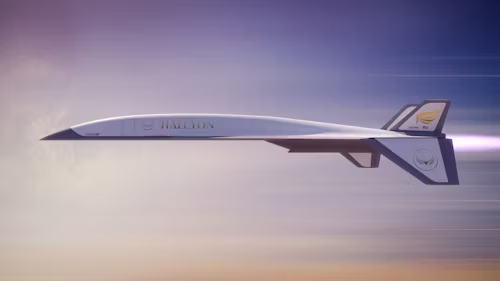
From the moment the Wright brothers’ flyers removed the sand to Kitty Hawk for the first time, humanity’s attraction to escape has been the story of tireless innovation. For more than a century, how a plane flies has been stabilized, its basic principle: lifting, thrust, drag, and gravity. But to keep our sky, look carefully at the modern miracles, and you will see a quiet revolution. Many souls of the aircraft remain, not with high engine or large wings, but with smart, cool, and more intensive technologies that are shaped for future aviation.
Changed its perception of aircraft forever. There are seven wonderful innovations in modern aircraft here that are really fantastic.
Table of Contents
1. The Silent Revolution: Electric & Hybrid-Electric Propulsion
The roar of a jet engine is the enduring sound of electricity and tour. But that thunderous crescendo is on the verge of becoming a whisper. The maximum transformative shift in aircraft design is the move towards electric-powered and hybrid-electric propulsion.
Imagine regional flights with 0 emissions, where the handiest sound is the quiet hum of an electric motor and the frenzy of wind over the wings. Companies like Eviation are leading the fee with plane just like the ‘Alice’, a sleek, all-electric powered commuter aircraft designed to carry 9 passengers for up to 500 miles. The advantages are surprising: extensively lower working prices, dramatically decreased noise pollution, and a carbon footprint that plummets to zero.
For longer trips, hybrid-electric systems—similar to those in our cars—are the bridge. This isn’t always technological know-how fiction; major manufacturers like Airbus, Boeing, and Rolls-Royce are investing billions, heralding a new era of clean, quiet, and efficient air travel.
2. The Brain of the Plane: Integrated Vehicle Health Management
Modern aircraft become emotional. Integrated Vehicle Health Management (IVHM) is a network of thousands of sensors built into the entire flight frame, engine, and system, which continuously monitors significant signals of the aircraft. It is a future, self-conscious nervous system.
These sensor motors track everything in turbines with minutes of vibration so that the fracture in the wings can be detected. This data is strengthened in ground-based systems, where AI algorithms analyze it to predict errors before analyzing it. Instead of maintenance on a certain level, repair is done correctly when needed. It maximizes safety, reduces shutdowns, and ensures that each component of the aircraft performs at its best. It is a preventive drug for machines, which makes the aircraft always safe.

3. Wings of Change: Morphing Wing Technology
Forget the hard, stable wings you see today. The future of the front is fluid and adaptable. Morning Wing technique, which is beautiful, inspired by the beautiful, spontaneous flight, allows the feathers to change their size in the flight to optimize the performance in all situations.
By using advanced materials such as mixed and lightweight mixed shapes, it can be subtle, twist, and bend the wings to the next generation. During the start and landing, the wing can introduce a large surface area for maximum elevator. At the height of floating, it can streamline to reduce the drag and maximize fuel efficiency. Companies such as NASA and Flexis have successfully tested wings with seamless morning flaps that eliminate traditional wings’ holes and joints, reducing the drag to 12%. It is a monumental leap in efficiency; biology combined with engineering is, in a way, a purely moving poem.
4. The Unbreakable Connection: Advanced Composites & 3D Printing
The skin and bones of the modern aircraft undergo a material revolution. Gone are mainly the days of aluminum construction. Like today’s aircraft, Boeing 787 Dreamliner and Airbus A350, more than 50% of the total materials are not in weight.
Carbon fiber is stronger than reinforced polymer steel, lighter than aluminum, and is more resistant to rust and fatigue. It provides a strong, high-pressure cabin (reducing jet layers), large windows, and incredible fuel efficiency. But innovation doesn’t stop there. 3D printing (or additive production) is now used to make complex parts – from duct and parenthesis to fuel to fuel – which is mild, strong, and more geometrically possible with traditional machining. This technique allows rapid prototypes, production, and a radical lack of physical waste.
5. A Clearer View: Synthetic & Enhanced Vision Systems
Fog, rain, and darkness have constantly been a pilot’s challenge. No longer. Synthetic Vision Systems (SVS) and Enhanced Flight Vision Systems (EFVS) are creating an environment in which pilots can “see” perfectly, no matter the weather outside.
SVS makes use of a particular database of terrain and barriers to generate a practical, 3-D depiction of the outdoor world at the cockpit displays, complete with highways, rivers, and runways. It’s like having a GPS map come to existence. EFVS takes it a step further via the use of infrared and thermal sensors to pierce through fog and darkness, displaying a real-time video feed of the outside surroundings on a head-up display. This permits pilots to land in conditions that might have formerly meant diversion or delay, drastically improving protection and operational reliability. The plane actually profits from a superpower: X-ray vision.
6. The Pilot’s Second Set of Eyes: Artificial Intelligence & Co-Pilots
Artificial intelligence goes from our phone to the cockpit. AI is developed as a sophisticated co-pilot, which is able to handle huge amounts of data, manage complex systems, and help in emergencies.
It can monitor AI flight traffic, weather patterns, and system conditions, and provide human pilots with customized recommendations for routing and fuel control. In an important situation, it can immediately diagnose the problem and present a priority list of solutions, and save precious seconds. Companies also test AI that can autonomously control an aircraft when it comes to a pilot’s inability. It’s not about changing pilots; It is about increasing their abilities with an ineffective, hyper program partner, which creates a unique safety trap.
7. The Sustainable Sky: Hydrogen-Powered Flight
While the electric propulsion is perfect for short-neck flights, the true sacred grill for long distances, zero-furnace travel is hydrogen. This is perhaps the most visionary innovation on our list, which has the opportunity to fully avoid aviation.
Hydrogen can be used in two ways: Power propeller in a fuel cell is combined to generate current, or directly into a modified jet motor. Only the byproduct is water. Airbus has unveiled its Shero concept aircraft, which can enter service by 2035. The challenges are important – a complete overhaul of the new fuel storage and distribution systems and infrastructure to the airport – but the reward is a future where there is nothing to cross the oceans, but the contradictions to clean water steam. This is a bold, fantastic commitment to a permanent future for flying.
8. Conclusion: The Future is Already Airborne
The time of the aircraft in the form of a pipe with wings is over. We enter a new golden age for aviation, where the aircraft is intelligent, skilled, and symbiotic with the environment. These seven innovations are more than just engineering miracles; They are promises. A promise of cool sky, cleaner journey, enlarged safety, and continuous surprise of surprise because we push the boundaries.
The next time you look and look at a plane that tracks a delicate line in the sky, remember: You don’t just look at a machine. If you oversee a symphony of state -art -art technology, a willingness to human simplicity, and a surprising preview of the future, you already have a destination.
Q1: What’s the most groundbreaking aircraft innovation ?
A: Electric vertical takeoff and landing (eVTOL) aircraft — think flying taxis that are quiet, green, and ready for urban skies!
Q2: Are passenger drones really becoming a reality?
A: Yes! Companies like Joby Aviation and EHang are already testing certified passenger drones for commercial use.
Q3: How is AI changing modern aircraft design?
A: AI optimizes fuel efficiency, predicts maintenance needs, and even helps design lighter, safer airframes using generative algorithms.