Man’s dream of pace is ancient. We ran rapid, tamed horses, built carriages, and constructed trains and automobiles. But whilst we left the sector, our courting with Velocity changed completely. The Jet engine failed to simply make airplanes faster; It reshaped continents, compressed time, and propelled humanity into a brand new era of opportunity.
Today, as we stand getting ready for a brand new supersonic generation, it’s fitting to look back and fearlessly move forward on the deep electricity of the jet. This is greater than a story approximately machinery; It is a story of human ambition, connection, and an insatiable choice to move past the familiar.
Here are ten insights into the top-notch energy.
Table of Contents
1. The Roar Was a Revolution: More Than Just Noise
The first time a jet plane roared across the sky, it wasn’t just a new sound; This was a foreshadowing of the future. Before jet aircraft, there were limitations to propeller-driven flight, characterized by air resistance and complexity.
The elegant simplicity of the jet engine—sucking, squeezing, accelerating, thrusting—adds up to the power. The distinctive roar symbolizes a fundamental truth: Breakthroughs often come from rethinking basic principles. Jet taught us that to leap forward, sometimes you have to forgo incremental improvement for a revolutionary idea. It was a loud, glorious declaration that old barriers had been broken.
2. Shrinking the World: The Social Fabric Rewoven
This is probably the most human impact of all. Commercial jets didn’t just carry people; they carried families, ideas, and cultures forward. Journeys that once took a week by seaplane or arduous train journeys became a matter of hours. A student can study by crossing the ocean. An expatriate can maintain relationships.
A trade deal can be sealed by shaking hands across continents. The global village was first created not by the Internet, but by jet planes. It connected worlds physically, creating a new, intimate planetary tapestry. Every reunion, every cultural exchange, every international partnership fueled by understanding has some jet fuel in the story.
3. The Sonic Boom: A Boundary in the Sky
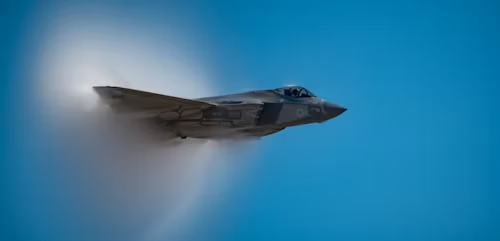
Breaking the sound barrier was as much a psychological milestone as it was a physical one. For years, it was considered an impenetrable wall – a “sound barrier” that machines would tear through.
When Chuck Yeager in the Bell, the sonic boom that hit the ground behind him was a physical manifestation: What we see as boundaries are often just boundaries. Every time a jet takes off supersonic, it echoes the fearless lesson: The loudest thunder announces the shattering of preconceptions.
4. The Democratization of Distance
While early jet travel was for the elite, aviation visionaries worked tirelessly to bring the power to the masses. The economics of the jet-faster trips mean more trips per day for each plane, and gradually began to reduce costs.
Package tours, low-cost airlines, and competitive prices appeared. The sky, once the domain of the adventurous realms, became a highway for ordinary people. A family can now dream of taking a beach holiday across the country, or a grandmother can dream of meeting her grandchild who was born far away.
5. A Catalyst for Globalization (The Double-Edged Sword)
The jet is the primary engine of our modern globalized economy. It enabled just-in-time supply chains, face-to-face multinational management, and the speedy movement of professionals. This fusion of economies lifted billions out of poverty and created unparalleled interdependence.
Yet, this insight has to be fearless: the same that supplies possibility also provides fragility. An economic crisis, an endemic, a disruption can ripple worldwide at jet velocity. The jet gave us worldwide resilience and global vulnerability in equal measure, teaching us that connection is both our greatest power and our maximum good sized threat.
6. The Environmental Awakening
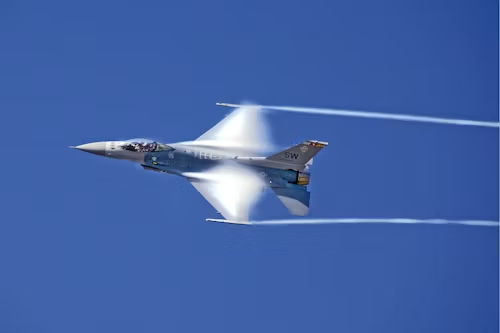
The contrails crisscrossing our skies have become iconic; however, additionally, they also sparked a vital communication. The jet age pressured us to confront the environmental value of our ambition. The emissions, the noise pollutants around airports, and the sheer aid intake have become impossible to disregard.
This undertaking has ended up the jet industry’s best catalyst for innovation. From research into Sustainable Aviation Fuels (SAFs) to modern designs for hydrogen-powered or hybrid-electric jet engines, the strain is fueling a brand new race. The next-generation jet will want to be now not simply powerful, but also a steward of the planet it so effortlessly traverses.
7. The Unseen Protector: Security in the Blink of an Eye
Beyond the civilian world, military aircraft redefined national security and strategy. The ability to project power or provide defense at supersonic speed changed the geometry of geopolitics. Air superiority, ensured by the power of fighters, became the cornerstone of the defense.
But look deeper: The same jet technology also powers reconnaissance aircraft that monitor treaties, disaster areas, and climate change. It quickly delivers humanitarian aid in crises. The jet is a device, and its moral compass is held by human hands – able to prevent, protect, and survive.
8. The Design Crucible: Beauty Born of Function
Few machines are as aesthetically perfect as the Smooth Jet. From the graceful sweep of Concorde’s delta wing to the formidable angles of the stealth fighter, jet design is a ballet of physics and artistry. Each curve is a dialogue with the air, solving the problems of lift, air resistance, and thermal heating.
Flying a jet is an exercise in controlled, principled violence. This marriage of raw strength and elegant form inspires engineers, artists, and dreamers. It reminds us that when form follows function at the highest level, the result has a beauty of its own.
9. The New Dawn: Supersonic’s Quiet Return
For decades after Concorde’s retirement, supersonic travel seemed like an ancient dream. Now a new jet renaissance is flourishing. Companies are leveraging carbon composite materials, artificial intelligence for aerodynamic modeling, and innovative engine design to tackle the twin challenges of sonic boom and fuel efficiency.
The goal is a “quiet supersonic” jet for business travel and eventually for personal travel. It’s not just about reviving the past; It’s about using decades of learning to finally make supersonic flight sustainable and practical. The spirit of Jet – continuous progress – is picking up again.
10. The Ultimate Metaphor: Human Aspiration Incarnate
Ultimately, the plane endures as our most powerful metaphor. To “fly” is to move forward with purpose and enthusiasm. To be “set” is to live a life without limits. In our language, jet is a symbol of freedom, progress, and pioneering.
It is the physical expression of our desire to rise higher, to move faster, to see what is beyond the horizon. Every jet that takes to the skies is a collective deep breath of ambition, a statement that our destinations, both literal and figurative, are worth the journey.
1. What is supersonic flight?
Supersonic flight occurs when an aircraft travels faster than the speed of sound—typically over 767 mph (Mach 1)—ushering in a new era of speed, efficiency, and global connectivity.
2. Is supersonic travel safe?
Yes. Modern supersonic jets are engineered with cutting-edge safety systems, advanced materials, and rigorous testing protocols—making them among the most rigorously certified aircraft ever built.
3. How does supersonic flight reduce travel time?
By flying at speeds up to Mach 1.7 or higher, supersonic jets can cut transatlantic flights in half—turning a 7-hour journey into just over 3 hours—giving travelers back precious hours without sacrificing comfort or care.