look at the sky. See that thin white line extending behind a small, glowing object? This scene is so common that we hardly notice it. For decades, the basic idea of a jet has remained the same: a tube with wings, powered by an engine that draws air, mixes it with fuel, and ignites it to create tremendous speed. It is a marvel of engineering that connects continents and cultures.
This is the story of that future. Welcome to the new era of aviation. Here are seven ground-breaking innovations set to power the jets of the future.
Table of Contents
1. The Hybrid-Electric : A Two-Powered Future
Imagine a car that uses both a gasoline engine and an electric motor to save fuel. Now imagine that the same principle applies to a giant airplane. This is the promise of hybrid-electric jets.
Today’s jet engines are incredibly powerful, but they have to do everything – provide thrust for take-off and handle the less demanding job of cruising. The hybrid system will use a conventional fuel-burning jet engine optimized for peak efficiency at high power, such as during take-off. But when the plane reaches cruising altitude, electric motors, powered by batteries or generators, will kick in to aid propulsion.
It’s not about building all-electric jets tomorrow – the battery technology for that is still too far away. Instead, it is a practical, landmark innovation. By sharing the workload, the main jet engine can run more efficiently, burn significantly less fuel, and reduce emissions. Think of it as giving jets an extra electric boost, making every flight greener and cheaper. Companies like Airbus and Boeing are spending billions of dollars to make this hybrid jet a reality, signaling a fundamental shift in the way we think about propulsion.
2. Supersonic Without the Boom: The Quiet Return of the Fast
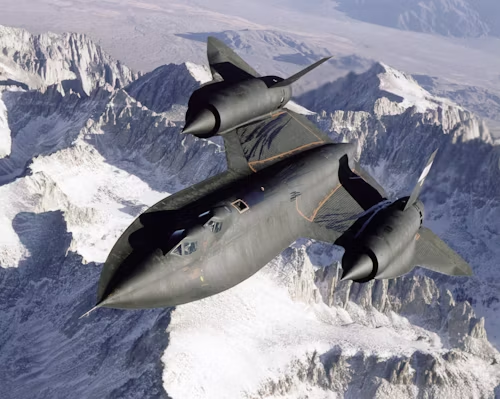
Concorde was a miracle – a sleek, supersonic jet that could cross the Atlantic in less than three hours. But its downfall was its acoustic boom, the booming sound of thunder that limited it to flying over water. For fifty years, the dream of supersonic travel seemed dead to the public.
Using advanced computer modeling and new airframe shapes, engineers are figuring out how to deal with the shock waves generated by the jet when it breaks the sound barrier. Instead of a single window-rattling sound, the sound spreads in a series of softer, more widespread thumps, like thunder in the distance.
This innovation could mean a new era of fast travel. The flight from New York to London can take just three and a half hours. A business jet can connect Tokyo and San Francisco in six. The key is to create a supersonic jet that is not only fast but also a good neighbor, able to fly high above the ground without disturbing people below. This technology will reignite our passion for speed and make the world smaller again.
3. Revolutionary Engine Designs: The Ultra-High Bypass Engine

If you look at the modern jet engine, you will see that it has become very widespread over the years. This is the “bypass ratio” – the amount of air bypassing the hot core of the engine compared to the air used for combustion. The higher the ratio, the more efficient and quieter the engine will be.
The next step up is the “Ultra-High Bypass Ratio” engine, or UHB. These engines are so large that it often does not seem like they should be mounted on a wing. Their huge fans move massive amounts of air at low speed, creating thrust more efficiently and with much less noise. It’s the difference between trying to push a small, fast paddle boat against a larger, slower boat. A larger paddle does the job with less effort and splash.
This is a key innovation that does not require a complete redesign of the aircraft, but offers huge benefits: up to 20% lower fuel consumption and a significantly quieter noise profile for the communities around the airports. It is the quiet, efficient workhorse that will power the global jet fleet for years to come.
4. “Winglets” on Steroids: The Truss-Braced Wing
Look at the wings of a modern airliner, and you will almost always see winglets – upturned ends that reduce drag. Imagine an entire wing that is long, incredibly thin,n and supported by a diagonal truss from the fuselage. It’s a truss-braced wing, and it can redefine the silhouette of jet aircraft.
Longer, thinner wings are more efficient aerodynamically – they create more lift with less drag. The problem is that they can’t be too long and thin on today’s planes, otherwise they will be too flimsy and won’t fit through standard airport gates. The truss provides the necessary support and allows a wing that is twice as narrow in relation to its length. This design dramatically reduces drag, resulting in huge fuel savings.
Companies such as NASA and Boeing are actively testing this concept. A jet plane with a truss-braced wing will seem strange to us at first, like something from a sci-fi movie. But its extraordinary efficiency will make it a game-changer for medium- and long-haul flights, ensuring that every drop of fuel is used to its maximum potential.
5. Sustainable Aviation Fuel (SAF): The Green Fuel
This might be the most important innovation on the list, because it’s not about the jet, it’s about fueling it. Sustainable jet fuel (SAF) is a drop-in replacement for conventional jet fuel, but is made from sustainable sources such as used cooking oil, agricultural waste, and even captured carbon dioxide.
The beauty of SAF is that it can be used in existing jet engines without any modifications. The jet doesn’t know the difference, but the planet does. When burned, SAF can reduce the carbon footprint of a flight by 80% over its life cycle, because the carbon it releases was recently absorbed from the atmosphere by the plants it was made from, creating a circular system.
The challenge is to increase production to meet the huge demand for the global jet fleet. But the industry is rallying around SAF as the most important medium-term solution to decarbonising aviation. This is key to keeping our current and future jets moving as we move towards a greener world.
6. The “More Electric” Losing the Heavy Hydraulics
Today, airplanes are heavy. A significant part of this load comes from the complex systems of pipes, pumps, and fluids used for hydraulics. These systems control vital parts of the jet, such as landing gear, flap,s and brakes.
The “more electric aircraft” concept seeks to replace most of these heavy hydraulic and pneumatic systems with lighter, more reliable electric systems. Instead of fluid pressure, electric motors will actuate the flight control movements. It does some amazing things: it reduces weight (which saves fuel), increases reliability, and simplifies maintenance.
For the pilot of a future jet, the experience may be similar, but the underlying machinery will be completely changed. This is a behind-the-scenes innovation that makes the entire plane simpler, lighte,r and smarter. This change is as fundamental as the transition from piston engines to jet engines, and represents a new paradigm in the design of aircraft systems.
7. Artificial Intelligence and Autonomous Systems: The Co-Pilot
The cockpit of a modern jet is already a masterpiece of computing. The next step is to introduce advanced artificial intelligence as a true co-pilot. This does not mean pilotless aircraft, but AI systems that can assist human crews in unprecedented ways.
Imagine an artificial intelligence that can monitor thousands of data points from a jet’s systems in real time, predict mechanical failure before it occurs, and suggest actions. Or consider an AI co-pilot that can optimize flight paths according to weather, win,d and air traffic in real time, saving fuel and ensuring a smooth journey. In emergencies, it can quickly analyze the problem and present the best possible options to the crew.
This technology makes Jet a thinking, learning partner. It reduces pilot workload, increases safety to levels never seen before, and optimizes every single aspect of flight. For passengers, this means more on-time arrivals, a smoother journey, and the confidence that their jet is powered by the most advanced computing power available.
8. Conclusion: A Sky Full of Promise
The golden age of the jet is not behind us; It’s on the horizon. These seven innovations – from hybrid power and silent supersonic flight to revolutionary wings and AI co-pilots – are not just ideas on a whiteboard. They are active, fiery areas of evolution converging to create a new chapter in human flight.
The jet of the future will be a symphony of these technologies: a hybrid-electric, AI-controlled plane with a truss-braced wing, powered by sustainable fuel, that will fly efficiently and quietly across continents. It will connect us not only with speed, but also with responsibility – to our planet and to each other. Heaven has always called us, and with these fierce innovations, we’re answering that call with smarter, cleaner, and more brilliant machines than ever before. The journey ahead for the humble jet has only just begun.
What makes the Jet Ignite 7 a game-changer in modern aviation?
The Jet Ignite 7 integrates seven breakthrough innovations—including AI-driven flight systems, sustainable fuel compatibility, and next-gen aerodynamics—that dramatically boost efficiency, safety, and passenger comfort.
How does the Jet Ignite 7 improve environmental performance?
It’s engineered for up to 30% lower emissions through hybrid-electric propulsion readiness, lightweight composite materials, and optimized flight paths powered by real-time atmospheric AI.
Is the Jet Ignite 7 designed with passenger well-being in mind?
Absolutely. From cabin pressure systems that mimic sea-level conditions to ultra-quiet interiors and circadian lighting, every detail prioritizes comfort, health, and peace of mind at 40,000 feet.