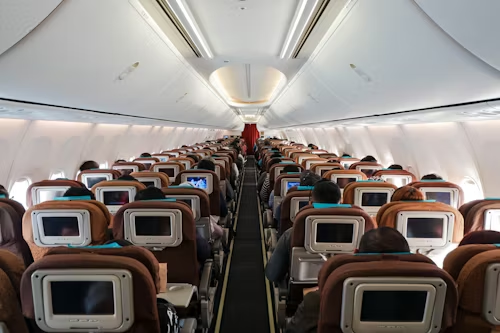
Let’s be honest. For many of us, the magic of escape is entangled in the threads of anxiety. The low rumble as the jet engine whirs into life, the sudden bump against the seat as the jet races down the runway – it can feel overwhelming, a reminder that we place our trust in a complex machine and the crew that operates it.
That power comes from knowledge. Understanding the “why” behind the processes turns arcane rituals into logical steps, transforming you from a passive traveler to a confident traveler.
It’s not about fear. It’s about familiarity. When you step onto that jet, you enter a world built for safety above all else. Let’s share seven essential safety tips that will deepen your understanding and give you true jet safety for your next flight.
Table of Contents
1. The Sacred Space of the Safety Briefing
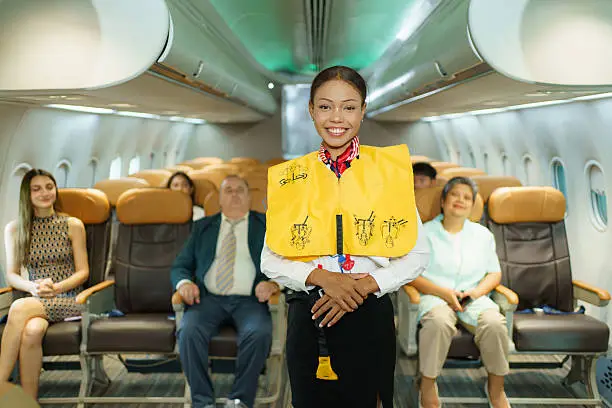
We’ve all been there. Cabin crew start a safety demonstration, and a plane full of seasoned passengers collectively pick up their phones or are engrossed in a novel. This becomes background noise. But here’s the important change in perspective: That orientation is not for flight attendants. They could read it in their sleep. This is for you. Every word, every gesture, is an important part of your personal safety map.
Why is this so important? In an emergency, stress has strange effects on our brains. This triggers fight, flight, or freeze, and higher-level thinking stops. We work with instinct and deeply rooted memory. If you were actively watching the briefing and noticed that your nearest exit was “two rows back, across the aisle”, you’ve made a mental bookmark. Your brain doesn’t have to think; It can remember. You have visually located the exit itself, not just the general “there”. You’ve seen how a life jacket is actually used, correcting the misunderstanding you’ve had for years.
Action for Confidence: Make it a game on your next jet. Put the phone away. Respond silently to the crew’s signals. “Yeah, that’s how my seatbelt comes off. My floor-level lights will guide me to that exit. The mask will actually flow oxygen, even if it’s not inflated.” These three minutes of active engagement are the most powerful thing you can do to prepare. This is your first step from passenger to partner.
2. Your Seat Belt: The Unassuming Hero of Every Journey
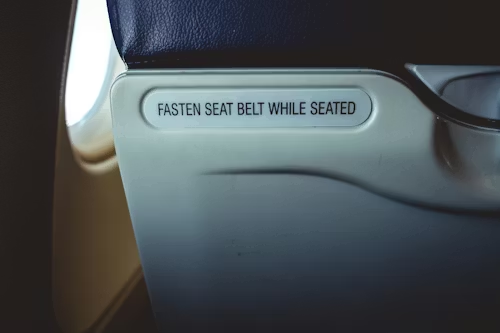
It sounds simple – a lap belt. Less complicated than your car. Nevertheless, it is the basis for safety in flight. Turbulence is not just rough air; It can be a powerful, invisible force that can appear without warning, even in a clear sky. Think of it as a pothole, but one you can’t see when you’re traveling at 500 mph. The “Fasten seat belt” sign is not a suggestion; These are real-time safety updates from the flight deck.
Keeping the belt low and tight across the lap when seated is not just compliance; This is extremely reasonable. This ensures you stay in your designated ‘safe zone’ – your seat – which is the safest place to be during any unexpected event. People have been seriously injured even on apparently smooth flights, because they were out of control and the jet was suddenly hit by rough air.
Action for Confidence: Develop the Habit. Sit down, click. Even if the signal is turned off on a quiet flight, consider this your personal safety protocol if you stay seated. Make it as automatic as putting on your headphones. This small act is a big statement about your self-care.
3. The Exits Aren’t Just Doors; They’re Your Strategic Map
You found your seat, 23A. Big. Now, before you settle in, complete your mental security scan. Turn your head and count the number of rows of exits in front of you and behind you. Do it. Just don’t look. “I’m three rows from the front exit, four rows from the back.” This simple counting creates tactile memory.
Why does it matter? Your vision may be impaired in a smoky or dark cabin. You may have to find your way by counting and touching the back of the seat, like a blind person reading braille. Knowing you have to move three rows forward, feeling the seats as you move, can guide you to safety.
Also, look at the people sitting around you. In the rare but serious situation where you need to open an exit, you may need help. A quick, friendly mental note about who looks skilled nearby isn’t crazy; This is practical. Each jet is designed with enough exits for everyone, but only if people can reach them efficiently.
Action for Confidence: As part of your pre-start ritual – after gearing up, before the movie starts – do the “exit count”. Left hand, right hand, forward, backward. Now you have a map that no one can take away from you.
4. The Oxygen Mask Lesson: Secure Your Own First
This instruction can seem counterproductive, even selfish. Parents tend to reach out to their child first. But the airline’s plea is rooted in cruel, life-saving logic. If the cabin loses pressure, the time to useful awareness at 30,000 feet is reduced catastrophically – perhaps 15 to 20 seconds. In the panicked, hypoxic state, you are likely to stumble. You may end up removing half of your child’s mask before he passes out. Now you are both unconscious.
By securing your own mask first, you ensure that you, the capable adult, remain conscious. You can then efficiently and calmly help your child, your traveling companion, or others who need help. You are the solution, not another victim. This is the aviation version of the lifeguard rule: Don’t let a drowning person pull you under. Each jet is equipped with more than enough oxygen for everyone; All it takes is one conscious person for the system to work.
Action for Trust: Internalize this as a deeper metaphor for caring. To help others effectively, you must first ensure your own stability. Repeat this to yourself: “I’m no good to them if I’m unconscious.”
5. Listen to the Language of the Jet and the Crew
A flight crew communicates in teams. Regular declarations are one layer. But their tone, speed, and even the sounds of the jets are different. A change in engine pitch, a turn that feels different, the flight attendant suddenly securing the galley – these are not panic signals, but to be careful.
More simply, if a flight attendant gives you an instruction, follow it immediately and exactly. Their training is expansive, scenario-based, and designed for the collective safety of everyone on the jet. If they say, “Sir, you need to move to this seat,” there’s an operational reason for that—perhaps a weight distribution problem is important to the balance of the jet in question. Arguing or hesitating will not help. Rely on their expertise.
Action for Confidence: Practice Situational Awareness. Be present in your environment. It’s not about looking for problems; It’s about getting used to it, as you might notice the seasons while you’re hiking. This awareness in itself is reassuring – you are connected, not just a piece of luggage.
6. Your Shoes and Your Stuff: Small Choices, Big Consequences
Packing your carry-on isn’t just about convenience. What you bring on board and on your feet are subtle safety options. Let’s start with shoes. In an emergency evacuation, you can step on a wing, an inflatable slide, or on the ground filled with debris. Thin flip-flops or high heels are not only impractical; they are dangerous. They can cause you or others to trip, slip, or make your feet unsafe. Wearing sturdy, closed-toe shoes is a simple preparation gift you give yourself.
Next, your bag. The heavy roller bag in the overhead container is a projectile under severe turbulence. Make sure it is stored properly and safely. More seriously, in an evacuation, leave everything behind. There are things in your bag. There is life in the exhaust. Holding on to your luggage wastes precious seconds, blocks the path of those behind you, and can cause damage on the descent. The crew on your jet will tell you this emphatically. trust them. Your passport, your laptop,and your souvenirs can be exchanged. There are no people behind you.
Action for confidence: Dress for the journey, not just the destination. Choose practical shoes. Be mentally prepared to let go of material things. This “things can change” mentality is incredibly liberating and inherently safe.
7. Breathe and Know the Statistics: Trust the System
Finally, the most important tactic is psychological. When anxiety whispers, counter it with facts. Aviation is the safest means of mass transportation in human history. That safety record is no accident; It is the result of a careful, global system.
When an incident occurs anywhere in the world, the entire industry learns from it. Rules change, design improves, training evolves. The jet you are on is the result of more than a century of tireless learning. Thousands of flights fly around the world every day without incident. Your pilot has probably gone through years of training and thousands of hours of flying. Aircraft are meticulously inspected by dedicated teams of engineers.
Action for confidence: When you feel the familiar pressure of anxiety, look around the cabin. Watch the flight attendant calmly serving drinks. Look at the person sleeping across the aisle. Listen to the steady, powerful hum of jet engines. Remind yourself, “This is normal. This is routine. I’m in a system designed, built, and run by people who have made security their religion.” Taking deep breaths. You are safe.
Q1: Why is it important to pay attention to the safety briefing?
A: Even frequent flyers can miss critical updates—each aircraft and route may have unique procedures. Staying alert ensures you’re prepared in an emergency.
Q2: Can passengers really contribute to flight safety?
A: Absolutely! Simple actions like keeping aisles clear, stowing bags properly, and following crew instructions actively support a safe flight environment.
Q3: What’s the #1 thing I can do to feel more in control during a flight?
A: Knowledge builds confidence. Understanding basic safety features—like how to use your oxygen mask or locate exits—reduces anxiety and increases peace of mind.