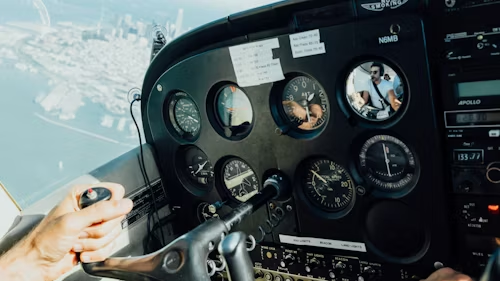
Are you legal to fly IFR? First, what does it take to get your IFR rating? Many of us get our rating under Part 61 after having completed the private pilot certification of the FAR, showing the aeronautical experience requirements to be eligible for the check ride. The Requirements to fly IFR include thresholds for normal experience that are mainly based on hours of flight time.
One of the primary requirements is to operate at least 50 hours of flight time across computers, such as a pilot in command. Cross-country flights are defined for these purposes, landing from one airport and landing at another airport, which is 50 or more nautical miles away from the straight line.
Table of Contents
1. Gaining Instrument Experience
Next up in the Requirements to Fly IFR is a requirement for 40 hours in actual or simulated instrument conditions. There are two ways to get this experience as an instrumental student working on your rating.
The first is to fly with a CFII. This can be either in actual IMC, which is a terrific experience, or with the view-limiting hood on in VFR conditions, or a simulator such as an Advanced Aviation Training Device like the Redbird.
The second is to fly with a safety pilot — someone who is at least a private pilot who can serve as pilot in command and be your eyes outside while you fly with the hood on. Time in instrument conditions means exactly that. If you fly a two-hour flight with your instructor or safety pilot but only have the hood on or are in the clouds for an hour of that time, it only counts as one hour of instrument time towards the 40.
2. Instruction and Cross-Country Requirements
Now, of these 40 hours, at least 15 have to be instruction received from a CFII — in other words, an instructor who has an instrument add-on rating on their instructor certificate. So, the FAA wants at least some of those 40 hours of instrument time to be with an instructor, rather than most of it with your buddy flying as a safety pilot.
As part of the Requirements to fly IFR, there are also specifics about what you need to do in those 15 hours of instruction. Three hours of the 15 have to be within two calendar months of your check ride date. This is so you have some current training before the big day. There’s also a requirement to do what’s sometimes called the long IFR cross-country.
This is a cross-country flight that’s a total of 250 miles along airways or direct routing from ATC, which we take to mean on an IFR-filed flight with an instrument approach at each airport and using three different kinds of instrument approaches. From there, we’ll head south to Salisbury, Maryland, and then return to College Park. We’ll file the entire flight IFR, either in three different segments or as a so-called round robin.
The entire distance is 270 miles. We’ll satisfy the three different approaches requirement by shooting the VOR in Atlantic City, the ILS in Salisbury, and the RNAV at College Park. Work with your instructor to develop an IFR flight that satisfies these rules in your area.
3. Logging Time and Meeting Experience Thresholds
So now, let’s look at the 40-hour instrument time requirements to Fly IFR. If you’ve just finished your private pilot, you probably remember that you’ve done at least three hours of instrument training as part of those requirements. The good news is that you can count that time towards the 40 hours, even if your private instructor wasn’t a CFII.
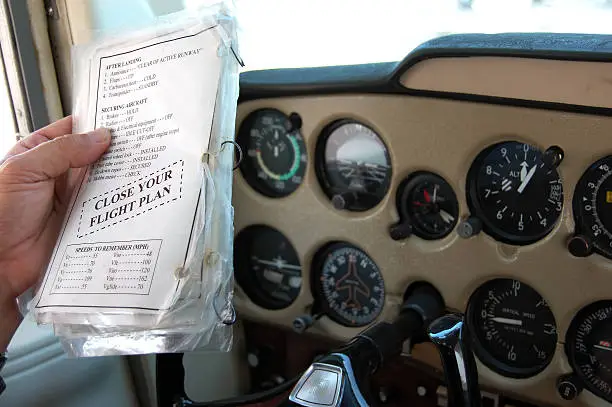
This flexibility is part of the broader Requirements to Fly IFR, ensuring that prior relevant training contributes toward your total instrument experience. Let’s add that time in. Also, all of this time we’ve flown with the instructor — the general training, the long cross-country, the three hours before the check ride — that was all instrument time, so it counts up here as well. The rest of the 40 can be with your instructor or with a safety pilot.
The 50 hours of cross-country time have to be as pilot in command, so any cross-country flying you did with your instructor before getting your private doesn’t count here, but that solo cross-country time — you had to do at least five hours of it — does count towards those 50.
4. Navigating the IFR Training Requirements
These are complicated Requirements to Fly IFR, so let’s look at an example of a student’s journey towards the rating. The hour thresholds again are 15 hours of instrument training with the CFII, 40 hours of instrument experience, and 50 hours of cross-country PIC. In addition to those hour requirements, we have two specific boxes we need to check — there’s the long IFR cross-country with the instructor, and the three hours before the check ride.
Our student comes in with a private pilot certificate, so they have at least three hours of instrument time and five hours of PIC cross-country time. This student will now do 26 hours of flight training with their CFII, and to be smart about it, will make each flight cross-country. This doesn’t have to be too much of an inconvenience. We can pick an airfield close to 50 miles away, do a quick touch-and-go, and then do our air work and head back. This approach efficiently fulfills multiple Requirements to fly IFR, including instrument time with an instructor and cross-country pilot-in-command time.
5. Building Time Efficiently
Anyways, what this does is fulfill three Requirements to Fly IFR at once. We have the instrument time with the instructor, which puts us over the threshold for those 15 hours, and we have the instrument experience and cross-country PIC time covered.
Remember, even though your instructor is with you, now that you’re a private pilot, you’re logging PIC time on each flight — all of which aligns with the Requirements to Fly IFR. Some of you might look at this and say this is too much instructor time — it goes way over that 15-hour threshold — but remember that that’s a minimum. Your instructor is going to move you on to the check ride when you’re both ready, so generally speaking, most students will log more than those 15 hours. Next up is the long cross-country.
We’ll say it’s four hours under the hood. It meets all three of those hour categories, and it checks the box for the cross-country.
Now, you can’t do all your flying as training. At some point, you gotta have some fun. So this student will do 15 hours of cross-country flying just with their family, which will put us over the cross-country threshold. In order to round out the instrument time, there will be four hours under the hood with a safety pilot, and those three hours in advance of the check ride, which also checks that last box and gives this student all the required experience.
Actual experiences will vary, with more or less instructor time or other resources as needed. Students conducting their training under Part 141 may be able to satisfy their requirements with fewer hours; those are listed in Appendix C to Part 141.
6. Staying Current After Getting Your IFR Rating
Now, once you’ve got your instrument rating, there’s a matter of keeping it current. Similar to the requirement for a flight review, 61.57, what’s needed to keep the instrument rating current.
First of all, in the last six months, you have to have performed at least six instrument approaches and have done holding procedures and intercepted and tracked courses.
This last one is assumed, given that you’ve flown instrument approaches using some kind of navigation guidance. So, on the day of your IFR flight, you should do a lookback. If, in the last six months, you can count one hold and six approaches in actual or simulated instrument conditions, you’re legally allowed to fly IFR that day. If you have to look further back than six months to find those six approaches and the one hold, you’re not legal, and you need to hit the sim or grab a safety pilot or CFII and get current, as per the Requirements to Fly IFR.
Also, if it’s been more than 12 months since you’ve counted those tasks, you’ll need to take an extra step, which is to do an Instrument Proficiency Check, or IPC. An IPC is like a mini check ride that you can do with a CFII instead of needing an examiner. The Instrument ACS, which is your playbook for the check ride, lists the required tasks for an IPC.
For example, Area of Operation 3, Task B, here are the holding procedures. At the bottom of this page, it lets us know that an AATD, like a Redbird, can be used for some of the IPC, but we still need an airplane for certain tasks, like the circling approach and landing from an approach. Once we’ve got the IPC out of the way, we’re legal again for IFR for another six months.
7. Aircraft Legality and Equipment Requirements for IFR
It’s one thing for you to be legal for IFR. It’s another for the aircraft you’re flying to be legal. Also, in private, we learned about the required equipment for day and night VFR flights. To be IFR legal, we’ll need some additional equipment: an attitude indicator, a turn coordinator, an inclinometer or ball, a directional gyro, radios and nav units such as VORs or GPS that are suitable to the route we intend to fly, a clock, and a source of power like a generator or alternator. Notice what’s missing — the VSI is the only instrument out of the big six that isn’t required for VFR or IFR flight.
Some of this equipment has to be inspected regularly as well. In addition to inspections required for VFR flight,Requirements to Fly IFR inspections every 24 calendar months on the static pressure system, the altimeter, and the altitude reporting system in the transponder, or the Mode C functionality of the transponder. These are referred to as the 91.411 checks, as this maintenance sign-off shows.
Also, we need to inspect the VORs every 30 days if we intend to use them on our flight. Pilots can do this themselves in one of several ways. Depending on how precise the method we use to check them is, we have a maximum allowable error of either plus or minus 4 degrees or plus or minus 6 degrees.
8. VOR Checks and Navigation Database
The first test is called the VOR Test Signal or VOT. If we look at the back of the chart supplement, we can see airports that have VOTs. These are special VOR signals used just for these tests. Here’s one at Bradley in Connecticut. From any point on the field, we can set the VOR frequency to 111.4, and we should be able to twist the OBS to zero and have the needle centered with a “from” indication. Also, if we twist to 180, it should center with the “to” indication. These indications will be the same no matter where on the field we are, so it’s not for navigation — just for testing.
Another test we can do is a VOR checkpoint, which uses an actual VOR used in navigation. We’ll look at the same page in the chart supplement and see that there’s one in Wilmington, Delaware. The “G” means it’s on the ground. It tells us a specific place on the field to test this out. It’s at the hold short for runway 9 on taxiway Kilo. So from there, we’ll tune to the frequency of 114.0, and the supplement tells us that if we twist to 285, we should have the needle centered with a “from” indication.
9. Airborne Checks and Database Requirements
Next up, we can do an airborne check. These are a bit less precise, so we have a 6-degree error tolerance. We’ll find airborne checkpoints in the chart supplement, too. Here’s one over the field in Farmville, Virginia. The “A 1600” means this is an airborne point, and we should fly over the point — the intersection of the runway and taxiway — at 1,600 feet. At a setting on the OBS of 257, we should get the needle centered and a “from” indication. So here we are at that altitude, about to cross over midfield.
We’ll have the frequency set up and 257 set on the OBS. Over midfield, we should see that indication to complete the check, which is an essential step in verifying navigational accuracy as part of the Requirements to Fly IFR.
The last two checks are a dual VOR check — where we’ll check the indications of one VOR off of those of a second — and a check along a Victor airway.
For the dual VOR check, we’ll use the Groton VOR. As we fly southbound down the Connecticut River, we’ll set up the frequency into our NAV1 and NAV2, and the OBS setting that centers both of the needles should be the same, give or take four degreesNow, from here, we can roll into our final test: the airway check. If we look at the sectional, we notice that Victor 16 — the 057 radial from the Calverton VOR across Long Island Sound — crosses over a prominent visual landmark: the mouth of the same Connecticut River.
If we tune to the Calverton VOR and set the OBS to 057, when we overfly the mouth of the river, we should expect to see the needle centered with the “from” indication. This is a bit of an imprecise check, so the tolerance is plus or minus 6 degrees. Performing this airway check ensures compliance with navigational accuracy as outlined in the Requirements to Fly IFR.
.
1. What are the main experience requirements to qualify for an IFR rating?
You need at least 50 hours of cross-country flight time as Pilot in Command, 40 hours of actual or simulated instrument time, and 15 hours of instrument training from a Certified Flight Instructor with an Instrument rating (CFII).
2.How often do I need to fly IFR to stay current?
To remain current for IFR operations, you must have performed at least six instrument approaches, holding procedures, and course interceptions/tracking within the preceding six months.
3. What equipment is required for an aircraft to be IFR legal?
An IFR legal aircraft needs specific instruments like an attitude indicator, turn coordinator, directional gyro, altimeter, clock, and suitable navigation radios (VOR/GPS), along with required inspections (e.g., static system check every 24 months).